Why Government Projects Require Material and Supplier Approval Before Supply
On amanah and municipal projects it is not enough that the product conforms in the contractor's own judgment; the government contract bars any permanent material from entering the site before it is formally approved by the supervising authority — the consultant or the amanah's supervision office. The contractual logic is plain: a lighting pole is a permanent element erected in public space and carrying a safety responsibility, and the owner is spending public money that must go to a product verified before it is fabricated and shipped, not after it stands in the street. Supply therefore passes through two linked tracks: approval of the supplier as a documented, capable factory, and approval of the material as a product of defined specification — sometimes merged into one submittal, sometimes separated, according to the project's system.
The formats and grades differ from one authority to another: some projects use a scale of "approved / approved with comments / resubmit / rejected", some settle for a written approval from the supervising engineer, and some require a committee inspection of a sample. The correct first step is therefore not assembling documents but reading the conditions booklet and the consultant's instructions to learn what this specific project requires; approval requirements vary between amanahs and between projects — even within the same amanah — and no universal checklist can be assumed. The one constant is the principle: no supply before documented written approval.
Ignoring this route costs far more than respecting it. Material that reaches site before approval is exposed to rejection whatever its actual quality; removing the rejected items and re-supplying runs at the contractor's cost in time and money, and the delay may be counted against the programme. Approval is therefore treated as an early critical-path item, not a formality rushed through before shipment; the review period, the comment rounds and any resubmission all precede the first real day of fabrication.
The Typical Submittal Package: Shop Drawings, Conformity Certificates, and Galvanizing Reports
A typical file — with the caveat that each project's documents define the final list — opens with a transmittal letter tying the file to the project number and BOQ item, then shop drawings of the pole with its dimensions, section, wall thickness, base plate, bracket and service door, then a valid conformity certificate on the SABER platform for the same product category, then a hot-dip galvanizing thickness report referenced to ISO 1461, origin certificates for the steel used, structural wind-load calculations, and the factory's record of comparable supplies. For those drafting the requirements from the other side of the table, the lighting-pole tender specifications guide covers how these clauses are written in an inspectable form in the first place.
What makes a file reviewable is not its page count but its attributability and verifiability: every document is tied to this project and this specification, not generic paper fit for any client; certificate numbers can be checked directly — a SABER certificate is verified on the platform, not from its image — drawings carry a revision number and a date, and datasheets agree with the drawings on every shared value. Samples of conformity documents and approvals can be seen on the certificates and approvals page to know what these papers look like before requesting them from any supplier.
Not every project demands the full package; some authorities settle for the conformity certificate, the galvanizing report and the drawings, while others require engineer-stamped calculations, a documented track record and a physical sample. The working rule for the contractor: obtain the consultant's requirements list in writing before preparing anything, then ask the factory for a file cut to that list — an oversized file delays, and an undersized one opens a round of comments and resubmission.
The Physical Sample: What It Shows and What the Supervising Engineer Inspects
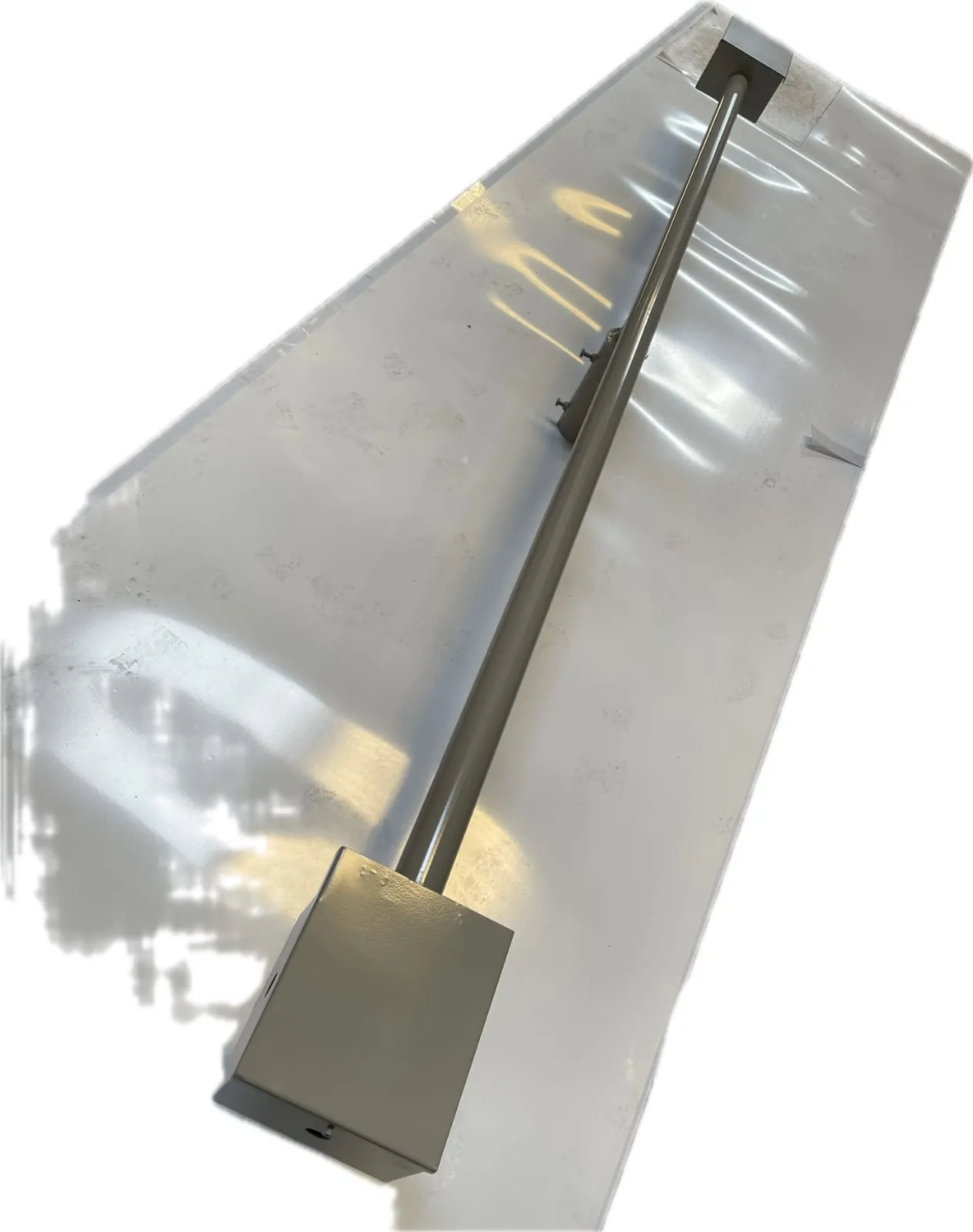
The physical sample — a complete pole or a representative section in final finish — shows what paper cannot: the regularity of the longitudinal weld seam and its freedom from visible porosity, the texture and uniformity of the galvanized surface, the powder-coat colour on real metal under site light rather than on a screen, the detailing and fit of the service door, and the base plate with its hole pattern. Many authorities therefore require it before final approval, particularly on large quantities or coloured finishes, where colour and texture cannot be settled from a printed catalogue.
The supervising engineer inspects along two axes: dimensional and qualitative conformity. Dimensionally: height, base and tip diameter, wall thickness at a cut edge, and base-plate dimensions and hole pattern against the approved drawing and the anchor-bolt template. Qualitatively: galvanizing thickness with a magnetic gauge at distributed points, visual weld quality, and coating uniformity and adhesion. The minimum thickness limits and the number of measurement points are confirmed against the latest edition of ISO 1461 and with a qualified engineer — these are methodological values that change with the standard's editions and are not assumed from memory.
Once approved, the sample turns from a display piece into a contractual reference: it is stamped or marked and retained on site or with the consultant, and every later delivery batch is measured against it. Any change after approval — in finish, thickness or a base-plate detail — requires re-approval, not discretion; supplying contrary to the approved sample is one of the shortest routes to a whole batch being rejected at acceptance.
Wind-Load Calculations to SBC 301 Inside the Approval File
A lighting pole is a cantilever fixed at its base carrying an exposed area at its head, and wind is its governing load; many government files therefore require calculated proof that the section, wall thickness, base plate, anchor bolts and foundation were designed for the site's data under Saudi Building Code SBC 301, not to a generic commercial size. The typical calculation starts from the design wind speed of the project's region and the exposure coefficient by terrain and height, includes the area of the luminaire or camera and any attachments on the body, then derives the base moment and verifies stresses and deflection.
In practice the calculation is attached to the foundation drawing and the anchor-bolt details — commonly referenced to ASTM F1554 — so the consultant can review the full chain from pole tip to concrete. Authorities differ in what they require: some accept a type calculation for the model, others insist on an engineer-stamped calculation for the specific project site. Every numeric value in this area — wind speeds, coefficients, deflection limits — is confirmed against the latest edition of the code and with a qualified engineer before being relied upon; the code is updated, and its values are not carried over from a previous project.
Division of Roles: What the Contractor Prepares and What the Factory Prepares
A successful submittal is joint work with a clear split. The contractor prepares what belongs to the contract: the transmittal letter on its letterhead with the project number, the link to the BOQ item, the consultant's approved submittal form, the scheduling of the sample inspection, and the follow-up on comments and responses. The factory prepares what belongs to the product: shop drawings with revision numbers, the conformity certificate, galvanizing reports, structural calculations, origin certificates, and the sample itself. The contractor is best served by requesting the package early from the lighting-pole manufacturing source it will actually contract with, rather than assembling it from scattered sources.
The gravest failure mode of an approval file is patchwork assembly: a catalogue from one factory, calculations from another, a galvanizing report for an old batch unrelated to the offered product. An experienced reviewer catches the inconsistency at the first comparison of two documents, and the rejection then wounds the contractor's credibility, not just the file, making every later submittal read under sharper scrutiny. The rule: one source for the documents — the factory that will actually fabricate — while the contractor's job is the contractual wrapping and the follow-through, not authoring the technical content.
Common Rejection Causes and How to Avoid Them at First Submission
Most rejection causes are paperwork, not production. Generic documents not attributed to the project read as a recycled file; an expired conformity certificate, or one for a different product category than the one offered; a contradiction between the shop drawing and the datasheet on a shared thickness or dimension; wind calculations transplanted from another project with a design speed that does not belong to the site; drawings without revision numbers, making it impossible to control which version was approved. Any one of these suffices on its own to return the file, and all are preparation errors caught by an internal consistency review before submission, not after.
Then come the sample and product causes: a sample whose finish or colour differs from what the documents offer, galvanizing measuring thinner than agreed, a base plate whose holes do not match the template, a visible weld with porosity or spatter. The only remedy is to inspect the sample internally — at the factory, with the contractor present where possible — by the same criteria the supervising engineer will apply, before it is submitted. A rejected sample is never rejected alone; it drags a fresh round of comments across the whole file and pushes the programme back.
Approval is the first link in a documentary chain that ends at the site gate: what was approved in the file and the sample is exactly what will be inspected and measured when shipments arrive, and a gap that slips through approval reappears magnified at acceptance. This guide is therefore read together with the delivery and acceptance documents guide as the two ends of the same chain. And the reminder stands: the lists above are common, not exhaustive; every supervising authority has its own practice, and the final reference is your project's conditions booklet and its supervisor's instructions.
A Documented Example: The Supplier Approval Behind 90 Camera Poles for the Al-An'am Market Development in Buraidah
On the Al-An'am market development project in Buraidah, Qassim region (2025) — a government-sector project — the supply of 90 camera-surveillance poles at 4 metres passed through the same route this guide describes: a technical and price submittal was made, and a formal approval letter was issued by Raqmi General Contracting Est., the project's main contractor, approving the Aktar factory as the supplier of the camera poles required for the project on the basis of that submittal. The approval letter is published among the documented projects on the Aktar projects page, with contact details and signatures redacted for privacy.
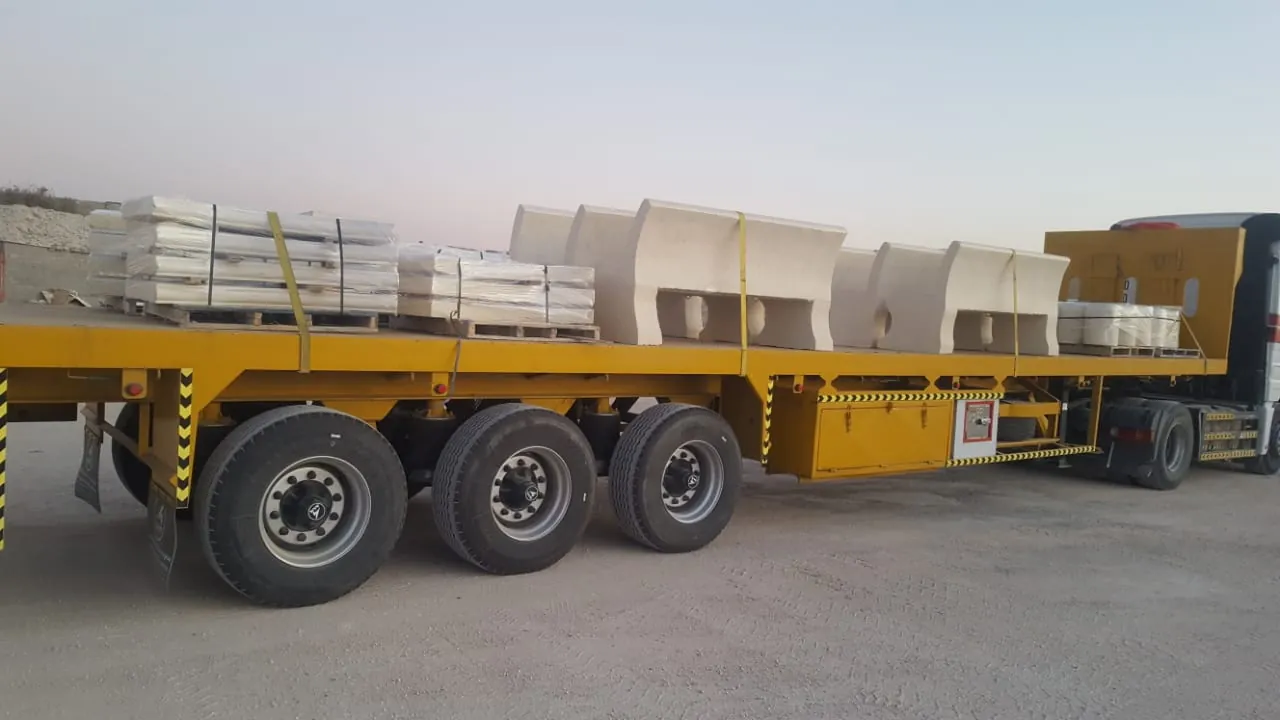
The order of events in this example is the lesson: approval preceded fabrication; the poles were then manufactured with a galvanized steel structure and a top enclosure for mounting the camera and protecting the wiring, together with foundations and anchor bolts, and the full quantity was delivered ready for installation on site. The letter was not a courtesy; it was the outcome of a reviewable file and technical offer. A factory whose files have passed real approval routes on government supplies knows from experience what stops a file at the reviewer's desk and what carries it through — knowledge that spares the contractor entire comment rounds.
Every project has its own approval requirement set by its supervising authority, and no successful example replaces reading your own conditions booklet. The practical step for a contractor holding a lighting- or camera-pole item: before contracting, ask the factory for a complete submittal package cut to your project's requirements, submit it early, and keep the review-and-comment time inside your programme. Aktar Lighting Poles Est. prepares these packages to each authority's requirements, and supply is quotation-based.