From Plate to Pole: An Overview of the Fabrication Line
A lighting pole standing at a roadside does not begin life as a pole; it begins as a flat steel plate that enters a fabrication line and leaves it as an engineered product, protected and documented. Between those two points the material passes through a fixed sequence: cutting the plate to its developed blank, rolling it into a conical section, closing the longitudinal seam weld, fitting the base plate and preparing the service-door opening, hot-dip galvanizing, powder coating, and finally quality control and documentation before dispatch. Each stage fixes a property in the pole that cannot be recovered later: the section is decided at rolling, fatigue resistance at welding, and protective life inside the galvanizing bath.
Understanding this sequence is not a technical luxury for the buyer; it is what allows a specification and an offer to be read deliberately, knowing which question is addressed to which stage. At Aktar Lighting Poles Est. the core stages — laser cutting, forming, welding, hot-dip galvanizing and electrostatic powder coating — are executed in-house, and they can be reviewed in practice through a documented tour of the fabrication line. Executing the stages under one roof means a shorter chain of responsibility and a single quality system following the piece from plate to dispatch, instead of responsibility scattered between a forming workshop, a galvanizing subcontractor and a third-party painter.
This guide follows the order of the line itself: cutting and forming first, then the weld and its critical details, then galvanizing and what happens inside the bath, then coating and final finishing, then quality control and its documentation, ending with what concerns the buyer directly — how knowledge of the stages converts into specific inspection questions asked on a factory visit or written into tender conditions. The aim is a reader able to distinguish a factory that owns its stages and can show them from a supplier reselling a finished product who knows the stages only by name.
Cutting and Forming: How the Conical Section Is Rolled
The journey begins at the cutting table. The flat steel plate is cut into a precisely calculated trapezoid — the geometric development that becomes a cone after forming — together with the service-door opening and any other required details. Laser cutting is used at this stage because the accuracy of the blank governs everything downstream: a few millimetres of deviation in the cut angle reappears later as a twist in the seam or an unevenness of taper that cannot be corrected after welding. Serious factories treat cutting as an engineering stage, not as cutting stock.
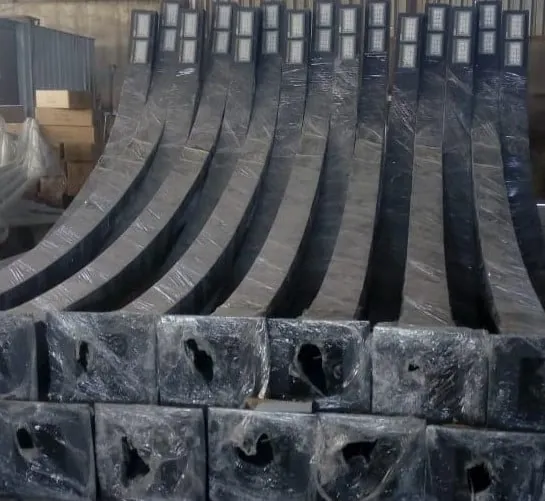
The plate then enters the rolling machine, passing between rolls that press it progressively until it curls onto itself, its edges meet, and a conical tube is formed: a wider diameter at the base tapering toward the tip. The taper is not an aesthetic choice; wind-induced bending moment peaks at the pole base and diminishes with height, so the conical section places material where stress demands it and saves it where it does not, producing a pole lighter and more efficient than a cylindrical tube of equal resistance.
Wall thickness and the base and top diameters are not figures picked from a ready table; they are outputs of a structural calculation that starts from the pole height, what is mounted on it, and the wind region of the project site, following the wind-load design methodology of Saudi Building Code SBC 301. Any thickness or diameter quoted in an offer or specification must be read as the result of a calculation for that project specifically, confirmed against the latest edition of the code and with a qualified engineer, not as a universal figure valid for every site.
The Longitudinal Weld, the Base Plate and the Service Door
After rolling, the plate edges meet along the pole's full length and are closed with a continuous longitudinal weld that restores the section's continuity and makes it act as one tube under load. This seam is the structural backbone of the piece, and its quality is measured not by outward appearance but by root integrity: lack of penetration, slag inclusion and porosity are internal defects that act as ready-made crack initiators from which fatigue cracks start under repeated wind oscillation, as the guide on why lighting poles fail details. The weld is therefore executed under documented procedures by qualified welders, and inspected rather than assumed.
The base plate is then welded on: a thick steel plate cut and drilled in a pattern matching the anchor bolts cast into the concrete foundation — bolts commonly specified to ASTM F1554, delivered with the precast concrete foundations and the setting template. The pole-to-base-plate weld is the most sensitive connection in the entire structure: through it the full bending moment passes from the conical body into the foundation, and the abrupt change in stiffness where tube meets plate makes the toe of this weld a classic stress-concentration point, managed by weld detailing and execution quality together.
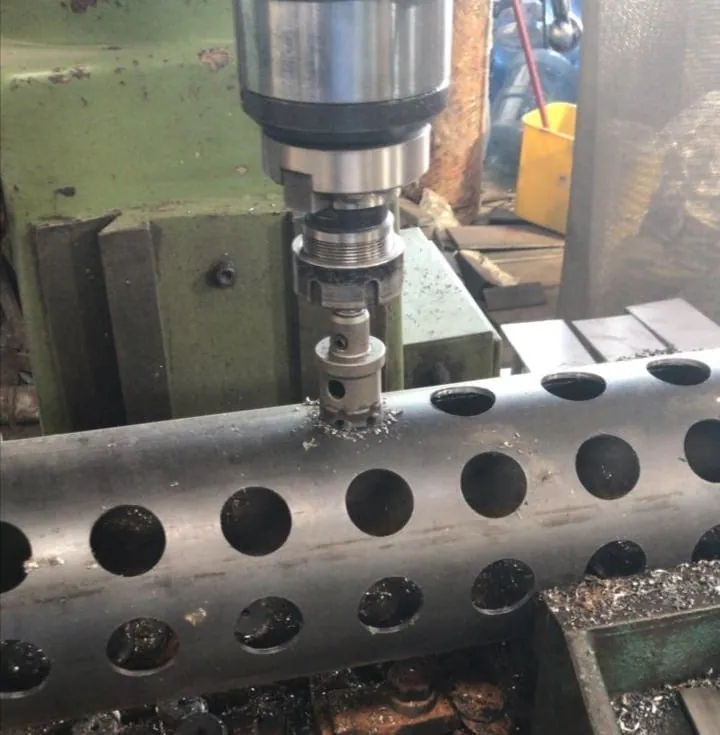
The service-door opening near the base is also prepared at this stage — the opening through which a technician later reaches the breakers and connections inside the pole. An opening is a cut in a loaded wall, so its corners are rounded rather than left sharp, the lost section is compensated by a reinforcing frame welded around the opening, and a tight-fitting cover prevents water pooling inside the cavity. These small details — a rounded corner, a frame, a cover — are the difference between an opening that was designed and one that was merely cut.
Hot-Dip Galvanizing to ISO 1461: What Happens Inside the Bath
The welded pole arrives at galvanizing as bare, corrodible steel and leaves it with a protection system bonded to the metal inseparably. Before immersion the piece passes through a preparation chain no less important than the dip itself: degreasing, acid pickling that removes scale and oxides, and a flux solution that primes the surface for reaction. Any residue left behind in this chain appears after the dip as uncoated patches, which is why galvanizing quality is judged from the cleanliness of preparation before it is judged from the bath.
The pole is then immersed whole in a bath of molten zinc; the steel reacts with the zinc to form zinc-iron alloy layers metallurgically bonded to the surface, topped by a layer of pure zinc. Full immersion is what distinguishes this method from any external coating: the zinc covers the outer and inner surfaces together, including the inside wall of the tube, which no coating can reach after assembly. The geometry of the piece requires calculated vent and drain holes that let the zinc flow in and out and prevent air being trapped in the cavity during the dip.
The governing reference for this stage is ISO 1461, which sets the minimum zinc-coating thicknesses by base-steel thickness, along with the measurement methodology and the number of measurement points. The resulting protection is twofold: a physical barrier isolating the steel from moisture, and cathodic protection in which the zinc sacrifices itself first, so the steel remains sound even where the layer is scratched. The numeric thickness required for a given project follows the steel thickness and the site's corrosivity category, and is confirmed against the latest edition of the standard and with a qualified engineer.
Powder Coating and Final Finishing in RAL Colors
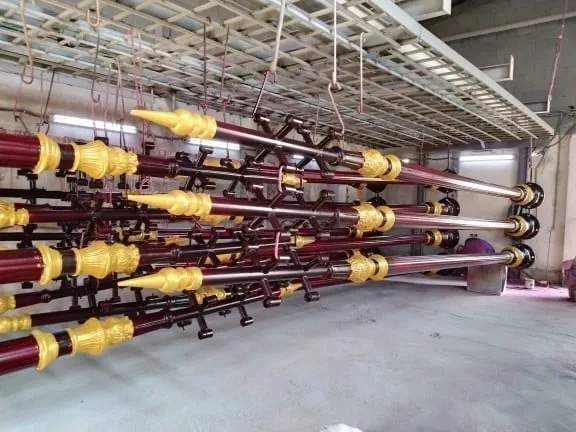
When the specification calls for a color — green for gardens, an architectural grey, black for a decorative pole — the galvanized pole enters electrostatic powder coating. The galvanized layer is first prepared to ensure adhesion, then the powder is sprayed electrostatically charged so it is drawn evenly onto the surface and envelops it uniformly, and the pole then passes through a curing oven where the powder melts and hardens into a homogeneous layer. The color is fixed in the purchase order by a standard RAL code, not a verbal description, so the batch matches the approved sample and any later supply for the same project.
The division of roles between the two layers must stay clear in the buyer's mind: hot-dip galvanizing is the corrosion-protection system, and powder coating is a color and appearance layer that adds an extra barrier — together known as a duplex system. Powder alone over bare steel is not a substitute for galvanizing, however glossy it looks; any scratch exposes the steel and rust starts there, creeping under the adjacent coating. The finishing clause in a specification is therefore read as two separate questions — what is the protection system, and what is the color system — not as one.
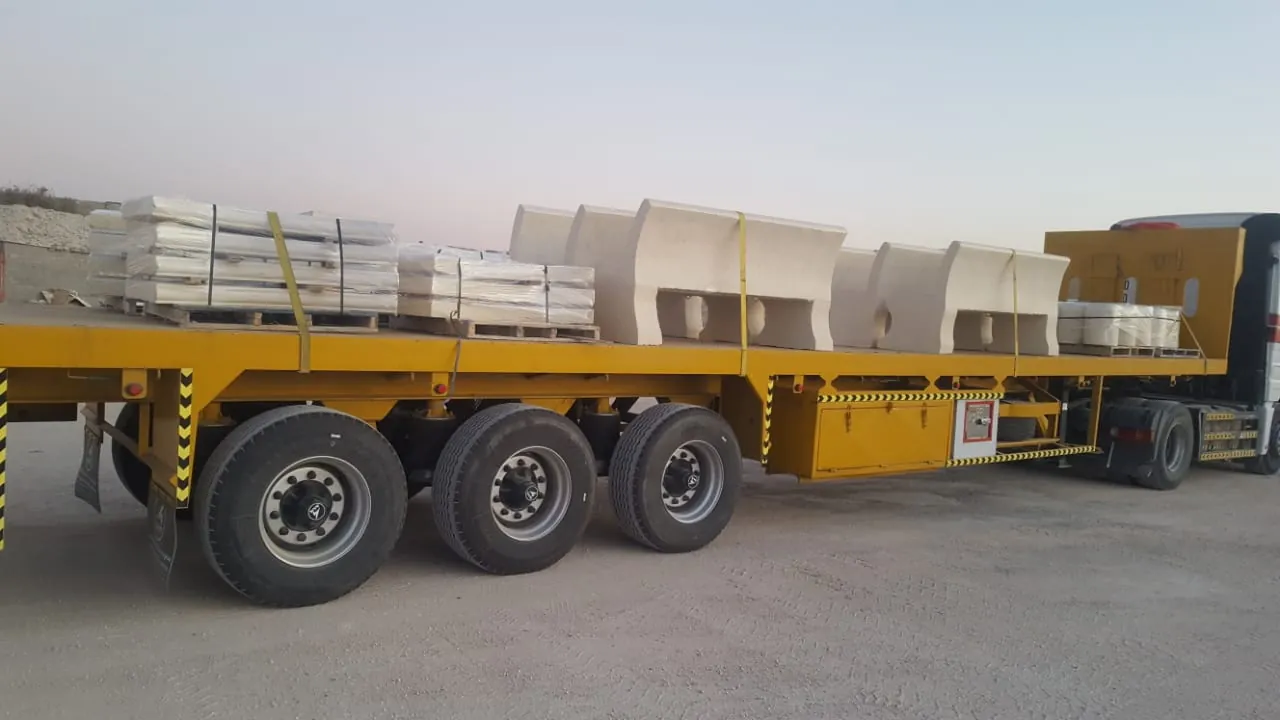
After coating, final preparation completes the piece: fitting arms or mounting hardware as ordered, closing the service door, and packing that protects the finish during lifting and transport. This last step is often underestimated, yet an excellent powder layer can reach site scratched if the poles are loaded without protective separators. Packing is therefore documented within dispatch procedures, and the condition of the finish is checked at delivery on site before signing — not after erection, when a transport scratch can no longer be told apart from a lifting or fixing scratch.
Quality Control: Zinc Thickness, Straightness and Documentation
The line's responsibility does not end at the last production stage; it ends at proving that what was produced conforms. Zinc-layer thickness is measured with a calibrated, non-destructive magnetic gauge at multiple points distributed along the pole's length and around its circumference, because thickness varies locally with the geometry of the piece and the manner of dipping, and the readings are compared with the ISO 1461 minima and with what the purchase order stipulates. Straightness and the principal dimensions — diameters, height, the base-plate hole pattern — are checked against the approved shop drawing, and welds are inspected visually and as the specification requires for critical welds.
Inspection then turns into paper: the batch's galvanizing-thickness report, the statutory conformity certificates, and batch-traceability records linking the shipped poles to their raw material and production date. This package is not an internal factory formality; it is what the buyer receives with the shipment and examines before signing the acceptance report, and specimen conformity certificates and quality documents can be reviewed before contracting. The rule: every property sold on paper — thickness, straightness, color — must be matched by a document belonging to this batch specifically, not to earlier production. The minimum values and the number of measurement points are methodological details confirmed against the latest edition of the standard and with a qualified engineer.
Why These Stages Matter to the Buyer: What to Ask on a Factory Visit
Knowledge of the stages converts directly into inspection questions. At cutting and forming: is rolling done in-house, and what is the source of the steel plate and its material certificates? At welding: are there documented welding procedures and qualified welders, and how are critical welds inspected? At galvanizing: is hot-dipping performed internally or subcontracted, and with what instrument is thickness measured? At coating: how is the RAL code controlled between batches? A factory that owns its stages answers by showing them directly; a reselling intermediary answers with words.
The final question is proof by projects: which batches actually left this line, for whom, and with what documents? A serious answer consists of documents, not generic photographs — such as the municipal development approval for the supply of ninety 4-metre camera poles in Buraydah, displayed among documented projects with their official papers. Matching the factory name on the project document against the name of the entity you are contracting with closes a common gap: a supplier presenting projects manufactured in someone else's factory.
Whoever understands the stages no longer reads the phrase "galvanized pole" a single way; they ask about the blank, the seam, the bath, the oven and the report. When preparing a request for quotation, stating the pole type, height, quantity and delivery city is enough for an offer built on the actual manufacturing stages, with delivery typically within 7–14 business days Kingdom-wide, and the galvanized steel lighting poles page is a practical starting point for reviewing types and specifications before making contact. A site visit to the fabrication line can be arranged in advance for those who prefer to see the stages rather than read about them.