
What Local Content Means in Lighting-Pole Supply
"Local content" is not a slogan or a "Made in Saudi Arabia" stamp printed on the product; it is an economic measure expressing the share of value added realised inside the Kingdom out of the total supply value, and it includes locally purchased materials, the wages of Saudi and resident labour working inside the Kingdom, manufacturing operations executed in a local factory, locally spent assets, services, and operating expenses, and profits retained in the national economy. In this sense, local content measures "where the value is realised," not "where the purchase order is issued" or "where the product is stamped." At the level of the pole itself, the value added is distributed across traceable stages: steel supply and preparation, cutting, welding and section forming, hot-dip galvanizing, powder coating, then packaging and transport. Every stage actually executed inside the Kingdom adds to local content, and every stage imported ready-made is counted as foreign content, so local content is usually expressed as a percentage of the product or contract value, calculated by a defined methodology comparing the value realised locally with the total.
A common error is to confuse local content with the mere existence of a Saudi commercial registration; a company registered in the Kingdom may be a factory that actually produces, or a trading entity that imports the finished product and distributes it without adding meaningful manufacturing value. The commercial registration proves the entity's legal existence, not the share of value it realises within the economy. Therefore, when a lighting-pole offer is evaluated from the local-content angle, one looks not at the supplier's nationality or administrative headquarters, but at where the value-generating manufacturing operations are executed and at the documents that prove it. The percentage is not the same for all suppliers under the same description; a factory that executes the full chain of operations internally reaches a far higher percentage than an intermediary that imports the finished pole and merely resells it. This separation between "the registered entity" and "the realised value" is the starting point for understanding the rest of the mechanism on which national-product preference in government procurement rests.
Why the State Weights Local Content: Vision 2030 and Industrial Localisation
Weighting local content in government procurement is not an arbitrary preference but an economic-policy tool tied to Saudi Vision 2030 and its industrial programmes aimed at localising industry, diversifying income sources, and reducing dependence on imports. Government procurement represents a huge and stable volume of demand, and when this purchasing power is directed toward the national product it creates a guaranteed market that encourages establishing factories, building local supply chains, and employing national talent. Lighting poles are among the products for which a local manufacturing base capable of meeting demand exists, which places them among the categories where the local-content share in public contracts is expected to be raised gradually, as an industrial product that can be fully localised inside the Kingdom. The authority competent for local content and government procurement regulates this policy through defined tools: a mandatory list of national products that must be preferred, a price preference for the national product during evaluation, a minimum local-content requirement in some competitions, and disclosure and documentation requirements obligating bidders to state their percentages.
These tools evolve through their editions and regulations, and their thresholds differ by sector, product type, and contract value; therefore the buyer and the consultant must not assume a particular percentage or threshold from memory or a previous project, but must verify the requirements in force and the current numeric limits against the latest regulations of the competent authority before drafting the tender or evaluating offers. For the owner and the municipal engineer, local content is not an optional item added out of goodwill but a regulatory obligation that must be reflected in the bill of quantities and evaluation criteria from the preparation of the competition; neglecting it at the drafting stage produces an award that may violate local-content requirements and expose the project to appeal or an audit observation. As noted in the guide to lighting-pole specifications in tenders, a sound clause is one that translates the regulatory requirement into a measurable, provable condition: a required local-content percentage, a document that proves it, and a mechanism to verify it, so national-product preference turns from a general policy aim into a disciplined procurement procedure applied equally to every offer.
The National-Product Price-Preference Mechanism
The core of the mechanism is that a national product listed on the mandatory list receives a price preference when offers are compared: its price is treated — for evaluation purposes only — as if it were lower by a defined preference margin compared with the competing non-national product. The effect is that an offer for a national product whose nominal price is slightly higher than an imported competitor may still win, because its price after applying the preference margin becomes the lowest in the comparison. This margin is a percentage set by the regulator and changing through its editions, so no specific numeric value is stated here; the margin in force, its scope of application, and its conditions must be confirmed against the latest regulations of the competent authority and the product category before it is relied upon in evaluation. It is important to understand that the preference is applied notionally in the comparison, not to the amount actually paid; that is, the entity pays the price submitted by the winner as it is, while the preference margin is used only as a calculation tool to rank offers during evaluation.
Entitlement to the preference usually requires that the product be registered and classified as a national product under the competent authority's rules, and that it fully meet the required technical specification; the preference ranks between conforming offers and does not permit accepting a non-conforming national product at the expense of quality, so the quality ceiling remains protected by the specification while the preference margin operates only within the bounds of offers that meet it. The practical effect is direct: a national factory that meets the classification conditions holds a real evaluation advantage, whereas an intermediary that imports the finished pole cannot usually claim the same preference because its product does not fit the national-product description. Therefore the buyer must not settle for the supplier's claim that its product is "national," but must require proof of classification and registration and verify it with the competent authority, and the tender should be drafted so as to require these documents within the offer, not after the award, so that applying the preference or excluding those who do not deserve it is possible at the evaluation stage rather than too late.
How Local Content Is Calculated and Documented in the Offer
Local content is calculated by a defined methodology comparing the value added realised inside the Kingdom with the total value of the product or contract, producing a percentage, and it relies on analysing the cost components: which part was spent locally on materials, labour, assets, services, and profit, and which part leaked abroad through imported components or services. To ensure the credibility of the percentage, it is often computed through an accredited verification body that issues a local-content certificate stating the measured percentage for a defined period. A distinction is usually drawn between "baseline" local content declared at qualification and "actual" local content realised during execution, and the gap between them may carry a contractual consequence, which makes the accuracy of the calculation and the honesty of disclosure a substantive rather than a formal matter. At the level of the pole, the percentage is fed by tangible elements: the source of the steel and the share of it prepared locally, the operations executed inside the Kingdom — cutting, welding, hot-dip galvanizing, and powder coating — the wages of the labour working in the factory, and the local operating expenses and assets.
The more operations executed internally, the higher the percentage; conversely, importing the finished pole makes the manufacturing local content close to zero, adding only the local distribution margin and perhaps simple packaging or light surface finishing, so an importing intermediary cannot reach a percentage comparable to a factory that executes the full value chain inside the Kingdom, however similar the two products are in appearance. The bidder proves its percentage by submitting a valid local-content certificate with its supporting documents within the offer, whereas self-declared figures without an accredited certificate carry far less weight and may not be accepted where the regulation requires independent documentation. Therefore the buyer must define in the tender the acceptable form of proof: the accredited issuing body, the validity period, and the certificate's scope so that it covers the supplied product and not another activity of the entity, and it must be verified with its source rather than from an image the supplier sends, turning local content from a declared number into an inspectable document.
A Local Factory's Documents Versus an Importer's and a Trader's
A local factory that produces lighting poles inside the Kingdom can provide a package of documents reflecting its manufacturing activity: the industrial licence and factory address, certificates of origin for the locally prepared steel, internal process records for galvanizing and coating, a local-content certificate where it exists, product registration on the SABER platform and conformity with SASO requirements, in addition to national-product classification where its rules are met. These documents together link the supplied pole to an actual production site and to documented manufacturing operations rather than a mere sales invoice, and a factory that possesses this capability provides them without hesitation because they are a natural product of its activity, not documents whose existence is contrived on request. The importer, by contrast, provides documents of a fundamentally different nature: customs declarations and certificates of origin showing that the pole was manufactured outside the Kingdom, which is counted as foreign content in the measurement methodology, and it may add limited local value through packaging, light surface finishing, or storage and distribution, but this value is marginal compared with the core operations that took place abroad.
Therefore the importer usually cannot present a local-content percentage that competes with the factory nor claim the national-product preference, unless it has moved substantial manufacturing operations inside the Kingdom and proved it with independent documents; the foreign certificate of origin here is not a defect in itself but clearly defines where the value is realised. The trading intermediary stands at the lowest end in terms of value added: it holds a commercial registration allowing it to buy and resell but possesses no production lines and executes no manufacturing operations, adding instead a distribution and brokerage margin, and the risk is that it presents itself in the offer as a "supplier" or "manufacturer" without a clear distinction. Therefore the buyer must classify each bidder into one of three categories — local factory, importer, or intermediary — because the documents each can provide differ structurally, and with them differ the local-content percentage and preference entitlement, so determining the supplier's real category rather than accepting its self-description is the first practical step in evaluating the local content of any offer.
Distinguishing Local Manufacturing from Assembly and Relabelled Imports
Not everything described as "local" adds local content to the same degree, so it is necessary to distinguish among three cases that are sometimes deliberately conflated: the first is full local manufacturing, where the steel is prepared, cut, welded, formed, galvanized, and coated inside the Kingdom; the second is assembly of imported components that arrive ready from abroad and are assembled locally with limited work; and the third is importing a finished pole that is relabelled or repackaged and presented as a local product. Local value added declines sharply from the first case to the third, and with it the local-content percentage, and the governing principle is the location of the material's "substantial transformation" into a product: where the operations that turned raw steel into a complete lighting pole took place. In the lighting pole specifically, the value-generating operations are cutting, welding, section forming, hot-dip galvanizing, and powder coating, so if these are actually executed inside the Kingdom, meaningful local content is realised.
But if the local activity is limited to coating alone over an imported galvanized pole, or to mere packaging and labelling, the local addition is marginal even though it may be marketed as "local manufacturing"; the distinction rests not on the label but on tracing each major operation: where the steel was cut, where it was welded, where it was galvanized, and where it was coated. A factory that executes the full chain can prove this with its process and asset records, while one that settles for a final cosmetic step cannot. The buyer must therefore treat expressions such as "assembled in the Kingdom" or "finished locally" with caution because they may conceal an almost fully imported product, and the remedy is for the tender to require an explicit statement of where each major operation is executed, supported by verifiable documents such as the industrial licence, galvanizing and coating records, and material certificates of origin. This does not mean excluding the importer or assembler from the competition, but classifying its offer at the local-content percentage it actually deserves rather than the one it claims, so evaluation remains grounded in the reality of operations rather than the eloquence of marketing description.
What the Buyer Must Verify Rather Than Take on Trust
The first thing to verify is the local-content certificate itself: the issuing body and its accreditation, the certificate's validity period, the measured percentage stated in it, and its scope so that it covers the supplied product and not another activity of the entity; an image of the certificate alone is not enough, and its validity must be verified with its source or its official platform exactly as a SABER certificate is verified, while a declared percentage without a valid certificate and matching scope is treated as a claim, not proof, so the offer that fails to support it with an inspectable document is downgraded. Second, the national-product classification and registration are verified directly on the competent authority's platform, not from a screenshot the supplier sends, and it is essential to confirm the thresholds currently in force — the price-preference margin, the minimum required local content if any, and the entitlement conditions — against the latest regulations of the competent authority, because these values change through their editions and differ by sector and product category, so relying on a percentage from a previous project or from memory is a recurring error that invalidates the evaluation.
The only adopted reference is the regulatory text in force at the time the competition is issued, and it is advisable to refer to the competent authority for any ambiguity in interpretation or scope. The paper documents are then reinforced by evidence of actual manufacturing activity: the industrial licence, a factory address that can be visited, material certificates of origin, and process records. It is advisable for the buyer to request from any supplier — regardless of its claim — a valid quality-management-system certificate such as ISO 9001 with a scope matching pole manufacturing, as a standard verification practice applied equally to all. It must also be confirmed that the entity submitting the offer is the manufacturer itself and not a trading front bidding on behalf of another factory, because local-content entitlement and national-product preference are tied to who actually manufactures; this graduated verification is what turns the local-content criterion from a declaration to be believed into a reality to be inspected and measured, protecting the owner from accepting fictitious local content that would breach the calculation methodology on audit.
The Effect of Local Manufacturing on Delivery, Warranty, and Spare Parts
Beyond the price preference, local manufacturing has an operational effect extending past the award stage; a production base inside the Kingdom shortens the supply chain and reduces dependence on international shipping and customs lead-time fluctuations. In practice, the typical delivery time for Aktar's in-stock items is about seven to fourteen business days to all regions of the Kingdom, while custom orders add their own manufacturing time. This flexibility in re-manufacturing and meeting non-standard orders is harder for the importer, who is tied to external production and shipping schedules, where any shortfall or modification may mean a whole new import cycle with its lead times and risks, while proximity to the production site also eases handling emergencies and providing replacement parts or poles within the same project. This advantage is not viewed in isolation from quality but as an operational dimension that complements technical conformity.
Local manufacturing also affects the practical execution of the warranty, even if it does not change its substance; Aktar Lighting Poles Est. issues a manufacturer warranty of up to ten years as a ceiling, not a floor, with each item carrying its own independent term fixed in the quote and purchase order. The warranty covers the pole structure and weld and manufacturing defects, hot-dip galvanizing to ISO 1461, and powder coating against fade, peeling, and chalking, and it excludes luminaires, floodlights, and LED sources — which are subject to their original supplier's warranty — as well as poor third-party installation, accidents, unauthorised modifications, and force majeure. The manufacturer's presence inside the Kingdom eases filing, processing, and field verification of a claim but does not widen the warranty's scope or alter its contractually fixed term. Nonetheless, local content must not be seen as a substitute for the technical specification; it is a procurement and regulatory dimension evaluated alongside quality, not instead of it, so offers are first filtered by full technical conformity and then ranked among themselves by national-product preference and documented local-content percentage.
Aktar: A Local Manufacturing Base in Riyadh
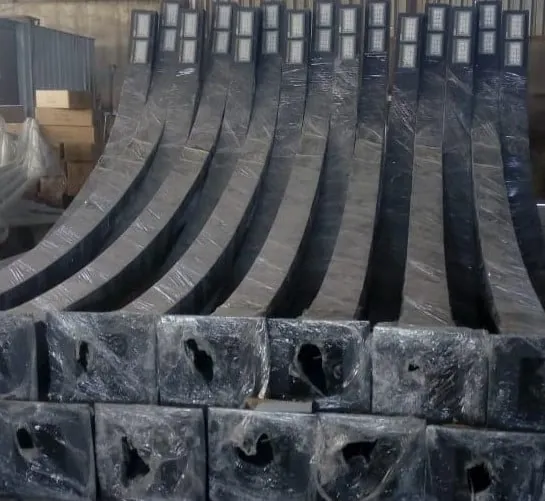
Aktar Lighting Poles Est. manufactures its products at its factory in Al-Sulai, Riyadh, in operation since 1432H / 2011, where the value-generating operations are executed internally: cutting, welding, laser cutting, hot-dip galvanizing, and powder coating. Production includes street and road poles, decorative poles, garden poles, stadium and court masts, laser-cut poles, walkway and parking poles, low bollard lights, and surveillance-camera poles, in addition to reinforced-concrete foundations. The products are manufactured with reference to recognised standards such as ISO 1461 for galvanizing and the Saudi Building Code SBC 301 for wind loads, with conformity to SASO requirements and registration on the SABER platform, and supply is quote-based with no public prices published. Because the core manufacturing operations take place inside the Kingdom, Aktar is a local production base able to provide the buyer with the documents that local-content criteria require.
So when the owner builds a local-content requirement into the competition, it is advisable to request from Aktar — as from any supplier — the current documents relating to local content and national-product classification, and to confirm the thresholds and percentages currently in force against the competent authority's regulations, because these values change through their editions and are not to be assumed; the fixed fact the buyer can rely on is that the poles are actually manufactured in a factory in Riyadh, not imported finished and then relabelled. Aktar's technical team can prepare the technical documents, calculations, drawings, and certificates of origin that the tender requires, and review the local-content requirements in line with the project's structural and finishing specification. As noted in the guide to choosing a lighting-pole factory, what distinguishes a serious supplier is its ability to prove its origin and conformity with inspectable documents rather than mere claims. Each project has its own independent technical demand according to height, location, function, and quantity, and to obtain a quote or an initial technical consultation on lighting-pole manufacturing and documenting your project's local-content requirements, you can contact the Aktar team via WhatsApp.
Frequently asked questions
What does local content mean in lighting-pole procurement?
Local content is the share of value added realised inside the Kingdom out of the total supply value, including locally purchased materials, labour, manufacturing operations, assets, services, and profits retained internally. In a lighting pole, each operation executed locally — cutting, welding, galvanizing, and coating — adds to the percentage, while an item imported ready-made is counted as foreign content. The measure looks at where the value is realised, not at the mere existence of a Saudi commercial registration.
How does the national-product price preference work?
A national product listed on the mandatory list receives a preference margin applied notionally when offers are compared only, so its price is treated as if it were lower by that margin, which may rank it above a nominally cheaper imported competitor. The entity pays the submitted price as it is, and the product must be classified as national and meet the specification. The margin percentage changes through its editions and must be confirmed against the competent authority's regulations before evaluation.
What is the difference between a local factory and an importing intermediary in terms of local content?
A local factory executes cutting, welding, galvanizing, and coating inside the Kingdom and provides an industrial licence, process records, and certificates of origin supporting a high local-content percentage. An intermediary or importer brings in the finished pole and resells it, so most of its value is counted as foreign content, and it usually cannot claim the national-product preference. Each supplier should therefore be classified by where operations are executed, not by its self-description in the offer.
Does Aktar manufacture its poles inside the Kingdom?
Yes, Aktar Lighting Poles Est. manufactures its poles at its factory in Al-Sulai, Riyadh, where the core operations are executed internally: cutting, welding, laser cutting, hot-dip galvanizing, and powder coating, with reference to standards such as ISO 1461 and SBC 301 and conformity to SASO and SABER requirements. For local-content requirements and national-product classification, it is advisable to request the current documents from Aktar and confirm the current thresholds against the competent authority's regulations. Supply is quote-based.