Why pole maintenance is a whole-life-cycle decision, not an emergency
Lighting poles are often bought as items to be installed and forgotten: height, type and finish are specified, the pole is delivered, and it is assumed it will simply last. But a pole's service life is not a number granted on delivery day; it is the product of manufacturing quality first, then of how it is maintained throughout service. An excellent pole left neglected can fail prematurely, while a sound pole followed with a simple schedule can exceed its expected life by years. Maintenance is therefore read as an extension of design, not a repair that begins after failure.
The defining trait of pole failure is that it is rarely sudden; it is a slow process that starts as a small rust spot, a slight lean, or a loosened bolt, and grows with every thermal and wind load cycle until it reaches a critical threshold. This gradual progression is maintenance's real opportunity: whoever catches the early sign through periodic inspection treats it with a cheap localized repair, while whoever neglects it until collapse pays for a full replacement and possibly an incident on a road or car park. Maintenance thus converts a likely costly failure into a small, scheduled intervention.
This guide treats the pole's life cycle from a practical angle: what truly determines its life, how it is inspected and repaired, what shortens it, and when to maintain versus replace. Because a pole's durability rests on protecting the steel from corrosion, this guide pairs directly with the galvanizing versus powder coating guide that explains the protective layer itself, with the foundations and installation guide that governs base stability, and with the earthing and safety guide that protects the electrical system — for a pole's life is the product of these three systems combined, not of the steel alone.
What truly determines a pole's life — corrosion protection above all
A steel pole does not wear out with use the way a moving machine does; its first enemy is corrosion. Steel exposed to air and moisture rusts, and rust eats into the section gradually until it weakens below its design capacity. The first and most important factor in a pole's life is therefore the quality of its corrosion-protection system: hot-dip galvanizing, any coating over it, and their integrity throughout service. All other factors — structural design, foundation, earthing — matter, but they guard the pole against sudden failure, whereas corrosion protection guards it against slow failure.
The second factor is the site environment. A pole in a dry inland area corrodes far slower than one in a coastal environment saturated with salts and humidity, or near an industrial source of sulfur pollutants. This environmental severity is classified in ISO 9223 into corrosivity categories (from low C1 to very high C5 and CX), and the higher the category, the shorter the protective layer's life for the same thickness. A pole's life therefore cannot be judged apart from its site; one specification may last decades inland yet need reinforcement on the coast, as detailed in the corrosion-resistant coastal poles guide.
The third and fourth factors are quality of site execution and regularity of maintenance. A weak foundation, deficient earthing, or a finish damaged during transport and installation opens gaps from which failure begins, however well the pole was made. And the absence of any periodic inspection means early signs pass unnoticed until they escalate. In summary: sound corrosion protection, a known-category environment, correct execution, and regular maintenance — these four combined, not any one alone, are what determine how long a pole actually lasts.
The life of hot-dip galvanizing and its link to corrosivity category
Hot-dip galvanizing to ISO 1461 is steel's first line of defense: a metallurgically bonded zinc layer that protects in two ways — a physical barrier isolating the steel from moisture, and cathodic protection in which the zinc corrodes sacrificially before the steel even where the layer is scratched. As long as the zinc layer remains, the steel beneath it stays practically intact. The life of the protection is therefore measured by the zinc layer's thickness and its annual consumption rate in the site environment.
The zinc consumption rate is directly proportional to the environmental severity classified in ISO 9223: in low-category dry inland environments consumption is very slow, so galvanizing lasts decades, while the rate rises markedly in high-category coastal and industrial environments. The practical rule is that galvanizing life (in years) roughly equals zinc thickness divided by the category's annual consumption rate; this is why coastal projects specify higher thicknesses or an additional coat over the galvanizing (a duplex system) to extend life. Exact figures are always verified against the latest edition of the standard, the site category, and a qualified engineer.
This explains why a single service life cannot be assigned to every pole: the same pole with the same galvanizing may last decades in Riyadh and need reinforcement at a coastal site. The applied galvanizing thickness is confirmed by measuring it on the delivered pole per what corresponds to ASTM A123 — a value requested in project documents because it, not the color or appearance, is the real measure of protection life. Choosing the right protection system from the start, as the galvanizing versus powder coating guide explains, is the single largest factor in a pole's life and far cheaper than treating early corrosion later.
The periodic inspection schedule — what is checked and how
Periodic inspection is the core of preventive maintenance, and most of it is a structured visual check that needs no complex equipment. A full inspection is carried out at regular intervals — many operators lean toward an annual cycle in moderate environments and more frequently in coastal or high-traffic ones — with the frequency set by corrosivity category and site importance. The goal is to catch early signs before they turn into failure: rust spots, lean, cracks, loose bolts, and the condition of the base and service door.
The check begins with a visual sweep of the structure for corrosion: rust patches, coating flaking, or a dull grey sheen indicating zinc consumption, with special focus on critical zones — the ground line where moisture is highest, the welds, and around the service door and holes. The pole's verticality is then checked to catch any new lean indicating base movement or a weak foundation, and the body is examined for hairline cracks, especially around welds and the service-door opening where stress concentrates.
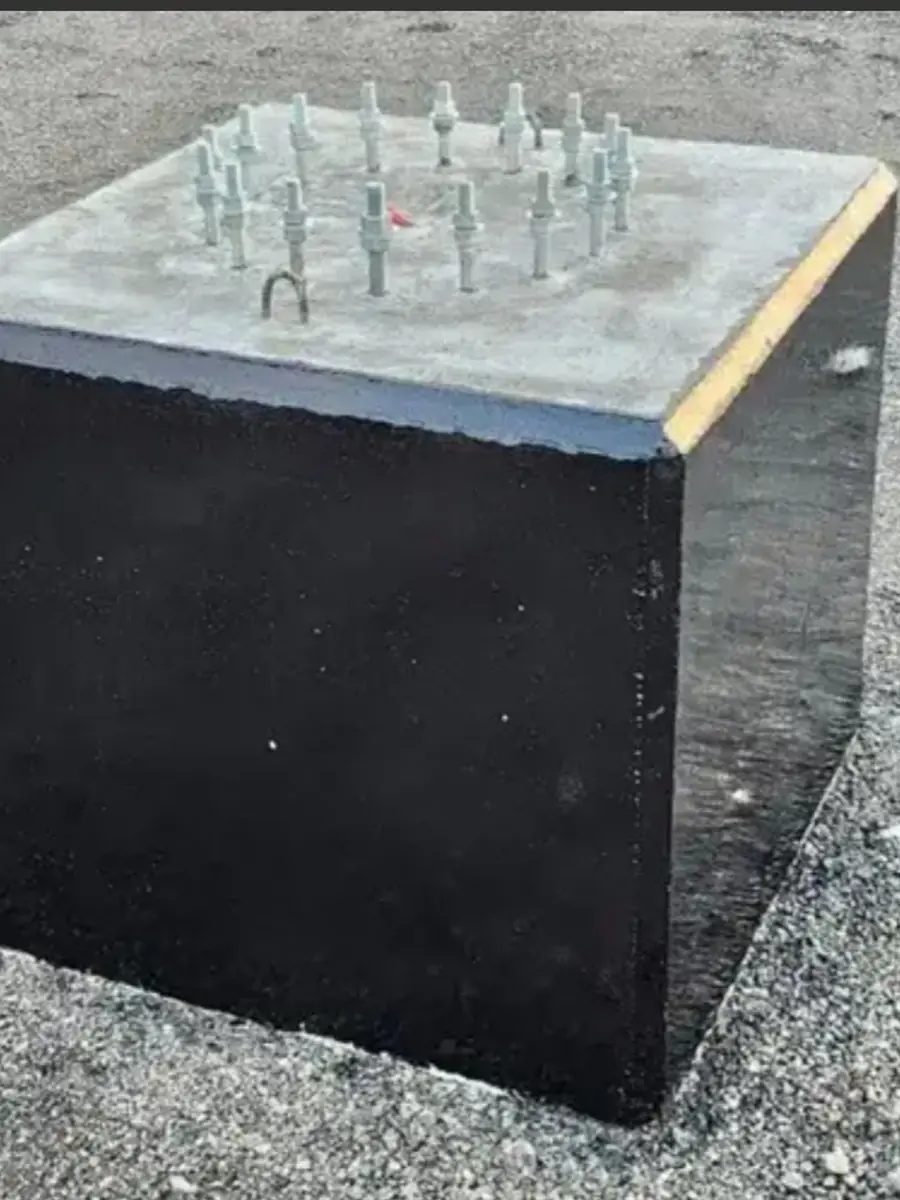
The check then moves to the base and fixing system: the concrete is examined for cracks or spalling around the base neck, the leveling grout under the base plate is confirmed intact and not crumbled, and the bolts are confirmed free of rust and not loosened. Everything observed is recorded in a documented log with its date, location and photo, for an inspection that is not documented loses its trace and reveals no developing trend. This sequence — corrosion, verticality, cracks, base, fixing, documentation — is the backbone of any serious maintenance program, and integrates with the logic of the foundations and installation guide that governs base soundness from the outset.
Re-torquing bolts and localized finish repair
Among the most neglected yet least costly maintenance actions: re-torquing anchor bolts. Bolts undergo repeated thermal and wind cycles that can loosen them over time, especially in the first months after installation. A loose bolt allows slight movement at the base that amplifies into lean and repeated stress on the welds. Bolts are therefore re-torqued to the torque specified in the design — not by estimated hand-tightening — in a cross sequence to distribute load evenly, and are best verified at the first inspection after installation and periodically thereafter.
The finish is repaired locally as soon as any damage is spotted, because every scratch that exposes the steel is a corrosion starting point. Scratches and gouges that penetrate the galvanizing are treated with zinc-rich paint that restores cathodic protection locally, or with zinc paste/spray for larger areas; powder-coated areas with flaking coating are cleaned and recoated with a matching layer. The principle is that early localized repair stops corrosion at its point before it spreads under the adjacent sound layer.
Timing is everything in repair: a scratch treated this year with a simple zinc coat can, over a few years, become a rust spot eating into the section that requires a far larger intervention. Repair is therefore tied directly to inspection — damage is spotted and treated in the same round or a close follow-up round. This simple discipline, re-torquing to spec and timely localized repair, is what keeps a pole within its original specification for many years without major interventions.
Inspecting the service door, cables and earthing
Pole maintenance is not only structural; half of it is electrical, taking place behind the service door (handhole) at the pole base. The door is opened at every inspection to check its internal cavity: it must be dry and clean, since water or dust entering the cavity accelerates internal corrosion and threatens the connections. The door cover itself is confirmed tightly closed and its sealing gasket intact, because the service door is the most common entry point for moisture into the pole's interior.
Inside the cavity the electrical connections are checked: the junction box, the breaker and the cable terminals, looking for corrosion, looseness, signs of heating, or damaged cable insulation. A loose or corroded connection generates resistance and heat that may develop into a fault or fire, and a cable with damaged insulation is a direct contact hazard. These are addressed immediately by re-tightening or replacement, as they are among the most common field lighting faults and the most preventable with a simple check.
The most dangerous item, because it is hidden, is earthing. The integrity of the earthing connection from the pole to the earth electrode is verified, confirming it has not corroded or detached, because deficient or missing earthing turns the pole into a shock hazard at the first insulation fault and strips the system of its lightning protection. Earth resistance is best measured periodically to confirm it remains within the required limit. This item ties maintenance directly to the earthing and safety guide, for the best earthing on installation day loses its value if its connection silently corrodes years later with no one to check it.
What shortens a pole's life — four main causes
The first and largest cause is a poor or damaged finish: galvanizing below the required thickness, a non-adherent coating, or finish damage during transport and installation that was not repaired. Any gap in the protective layer becomes a rust starting point that eats the section inside and out. Because the finish is the basis of a pole's life, a flaw in it shortens life more than any other factor — and here the importance of choosing the right protection system at the factory shows, rather than settling for an attractive surface appearance.
The second cause is deficient earthing; the third is a weak foundation. Deficient earthing does not directly shorten the steel's structural life, but it is a safety hazard that can damage the electrical system, endanger lives, and in some cases accelerate electrochemical corrosion. A weak or undersized foundation allows lean and repeated movement at the base that stresses the welds and accelerates failure, as the foundations and installation guide details. Both are execution defects that begin on installation day and show their effect years later.
The fourth cause is mechanical impact: a vehicle collision, damage during nearby works, or a load the pole was not designed for added later (a camera, sign, or overhead cable that raises wind-exposed area beyond the design). An impact may expose the steel so corrosion begins, or cause permanent deformation that weakens the section. These four causes share a common denominator: all begin small and are neglected, and all would have been caught early by periodic inspection and treated at trivial cost before escalating.
When to maintain and when to replace — and documenting maintenance
The choice between maintenance and replacement is an engineering decision built on the condition of the steel section, not on the pole's numerical age. As long as corrosion is superficial, the protective layer is repairable, and the section has not lost a meaningful part of its thickness, the pole remains a candidate for maintenance: finish repair, re-torquing, connection repair. But when corrosion has eaten a critical part of the wall thickness, structural cracks have appeared, a permanent uncorrectable lean has occurred, or an impact has deformed the section, replacement is safer and cheaper than a repair that does not restore design capacity.
The warning signs that favor replacement: deep, spreading rust especially at the ground line where much failure begins, pitting that penetrates the wall, cracks around welds or the service door, clear corrosion in the base neck or bolts, and a lean increasing from one inspection to the next. The final judgment is referred to a qualified engineer who measures remaining section thickness and compares it to the design requirement, for the decision concerns safety on a public road and is not left to visual judgment alone.
What makes this decision possible in the first place is documentation. An organized maintenance log for each pole — installation date, results of every inspection, repairs carried out, galvanizing-thickness and earth-resistance measurements — turns maintenance from scattered reactions into a program that reveals trends: which sites corrode faster, which signs are growing, and when a pole nears the end of its life. This documentation is also what activates the warranty when needed, proving the pole was maintained to specification and supporting the replacement decision with an objective record rather than a momentary opinion.
Maintaining Aktar poles and the warranty up to 10 years
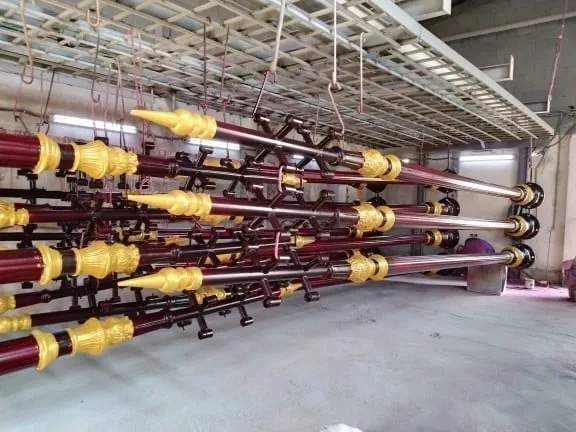
At the Aktar factory in Al-Sulai, Riyadh, a long pole life begins on the production line, not on the maintenance schedule: we hot-dip galvanize the structure to ISO 1461 and apply electrostatic powder coating over it on request for a dual protection system that extends life in harsh environments, and we design for wind loads per the Saudi Building Code SBC 301, within SASO conformity. Our seven families — street, decorative, garden, sports, laser-cut, walkway and parking, and bollard — and our heights from half a meter to sixteen meters (and higher on request) are made to each project's specification and environment.
This solid foundation is what underpins Aktar's warranty up to ten years per specification, backed by hot-dip galvanizing. The warranty is not an abstract promise; it is the direct result of a correctly thickened corrosion-protection system on the steel, making the pole's service life calculated rather than hoped for. And because the warranty is paired with sound maintenance, we provide our clients with guidelines for periodic inspection, localized repair, and bolt re-torquing, so the protective layer stays effective for the full term and the record that activates the warranty is preserved when needed.
At Aktar we make the pole to last and we support its maintenance to keep it within specification. Send us the pole type, project site and environment, and whether it is dry inland or humid coastal, and our technical team will return a written recommendation of the suitable protection system, a practical inspection schedule, and repair requirements — linking galvanizing, earthing and the foundation in a single maintenance program. The preliminary technical consultation is free and non-binding via WhatsApp.
Frequently asked questions
What determines a lighting pole's service life?
The first factor is the quality of the corrosion-protection system, based on hot-dip galvanizing to ISO 1461. Next come the severity of the site environment classified by ISO 9223 corrosivity categories, the quality of site execution in foundation, earthing and finish, and the regularity of maintenance. These factors combined — not the steel alone — are what determine how long a pole actually lasts.
How long does a hot-dip galvanized pole last?
Life depends on the zinc layer's thickness and its annual consumption rate in the site environment, since life roughly equals thickness divided by the consumption rate. In dry inland, low-corrosivity environments galvanizing can last decades, while life shortens in high-category coastal and industrial environments, where higher thicknesses or a duplex coating are specified. Exact figures are verified against the latest edition of the standard, the site category, and a qualified engineer.
What does periodic lighting-pole inspection include?
Inspection is mostly a structured visual check covering: corrosion and rust spots especially at the ground line and welds, pole verticality to catch any lean, cracks around welds and the service door, the condition of the concrete base, leveling grout and bolts, and an internal check of the service door, cables and earthing. Everything observed is documented with its date and photo in a maintenance log, and the frequency is set by corrosivity category and site importance.
When should a pole be maintained versus replaced?
As long as corrosion is superficial, the finish is repairable, and the section has not lost a meaningful part of its thickness, the pole is maintained with localized repair, re-torquing and connection repair. But with deep corrosion penetrating the wall, structural cracks, a permanent uncorrectable lean, or impact deformation, replacement is safer and cheaper. The final judgment is referred to a qualified engineer who measures remaining section thickness against the design requirement, supported by a documented maintenance record.