Why every lighting project starts with the pole type
Before height, finish, or quantity comes a foundational decision: which pole type suits the site? The pole type determines its function — functional or decorative lighting — how it distributes light, its cost, and even how it will be maintained later.
Specialized factories make several pole families, each with its best-fit context. This guide walks through the main lighting-pole families — their heights and typical uses — to make it easier to pick the right type for each part of your project.
Street and road poles
The most-requested category in municipal and contractor projects. Steel conical or cylindrical poles, usually 6 to 12 meters tall, carrying one or two upper arms to spread light across the carriageway and the pedestrian paths on either side.
These poles are hot-dip galvanized to resist rust over the long term, and usually powder-coated in a uniform project color. Secondary roads and parking lots use lower heights, between 4 and 8 meters, and may carry twin arms to cover two directions. Height and pole spacing follow the target illumination level and the traffic-safety code. See the technical pages: street and road lighting poles and parking and driveway poles.
Garden and walkway poles
Pedestrian-scale poles, usually 2 to 5 meters tall, designed for warm, eye-comfortable lighting on walkways, public gardens, villas, and residential compounds. Their main goal is pedestrian comfort and highlighting the place — not covering large areas.
These poles feature UV-resistant finishes and are often combined with simple decorative designs that suit the garden's character. Correct spacing creates a coherent visual rhythm after dusk without glare. See the technical page: garden lighting poles.
Decorative poles
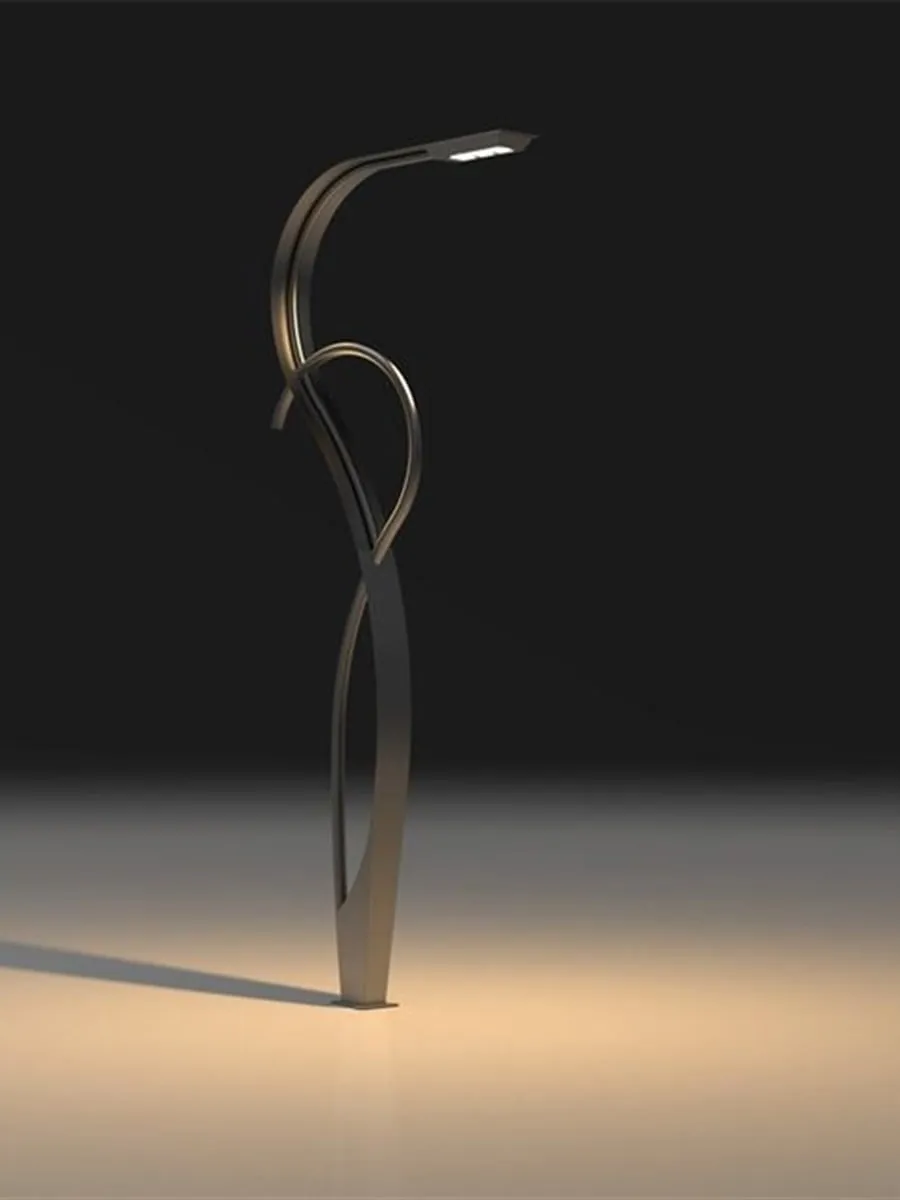
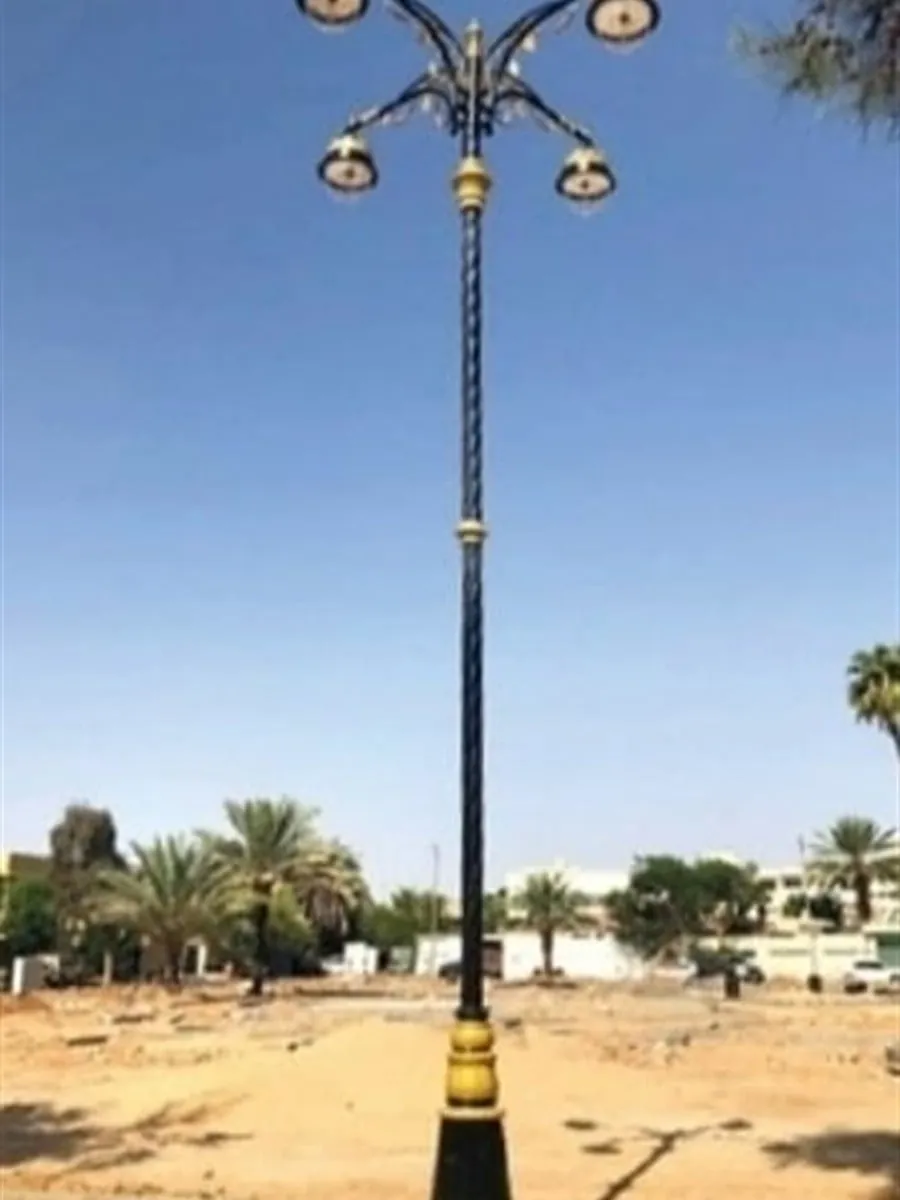
Here the pole becomes an architectural element, read in daylight before it is lit at night. Designs range from Italian classical — a sculpted base and a lantern head — to modern geometric with clean lines. They suit tourism walkways, hotels, commercial façades, and palace gardens.
The key with decorative poles is to serve the place rather than overpower it, and to keep the style consistent within each zone. They can be made in different heights, colors, and custom casting details to match the project's identity. See the technical page: decorative lighting poles.
Laser-cut poles
Laser-cutting allows precise etching on the pole structure — the project logo, a decorative motif inspired by local architecture, or perforations that cast a luminous shadow on the ground when lit from inside. A distinctive option for tourism destinations and projects with a unique character.
This type pairs function with deep customization, and is often used at sites investing in the after-dusk visitor experience. Laser-cutting can be combined with any of the other families to add a distinctive touch. See the technical page: laser-cut lighting poles.
Bollard lights
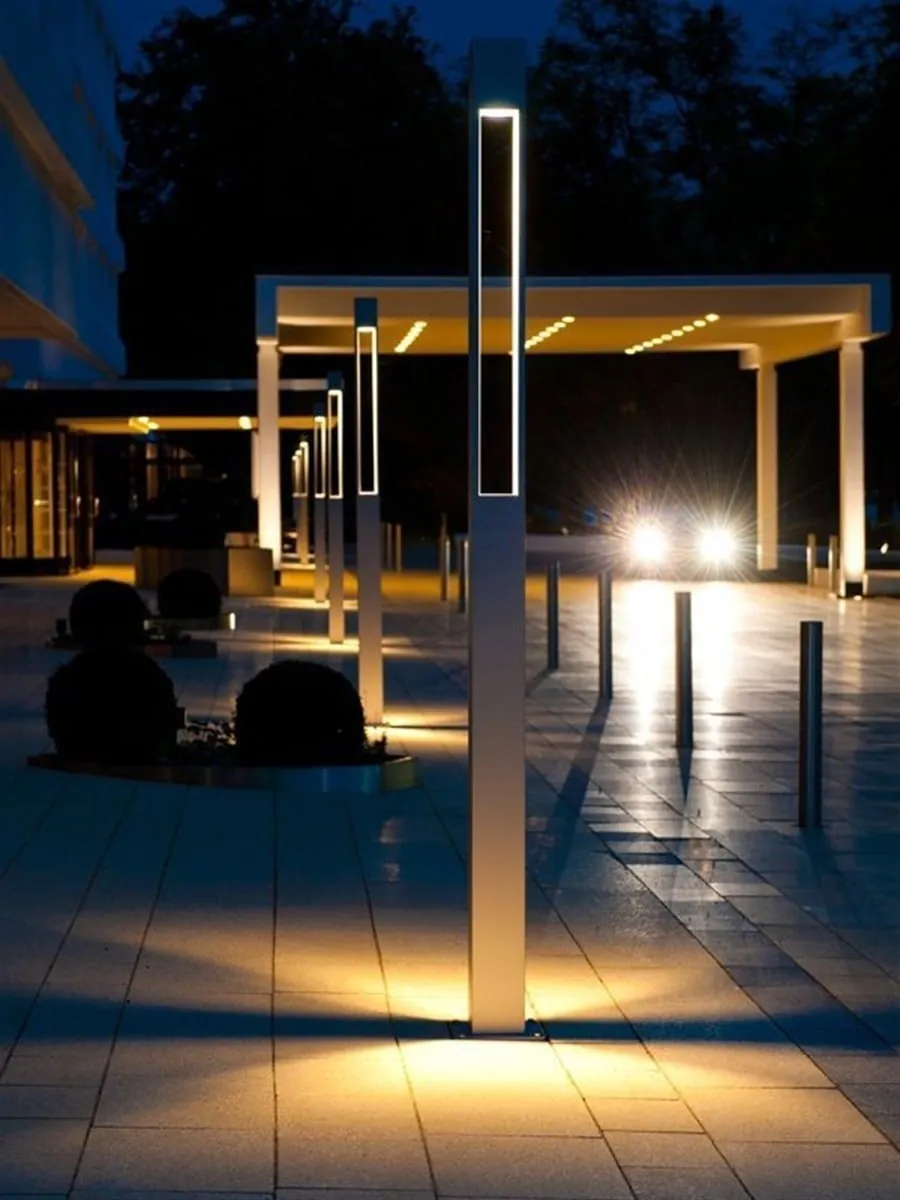
Short poles, usually between half a meter and a meter and a half tall, installed along walkway edges, entrances, and around villas. They provide low-level lighting that defines the path and improves safety without glaring pedestrians.
Bollards suit projects that need quiet ground-level lighting — landscaped gardens, entrances, and plazas. They are often built with an LED strip or downward-directed openings to reduce glare. See the technical page: bollard lights.
High masts and stadium poles
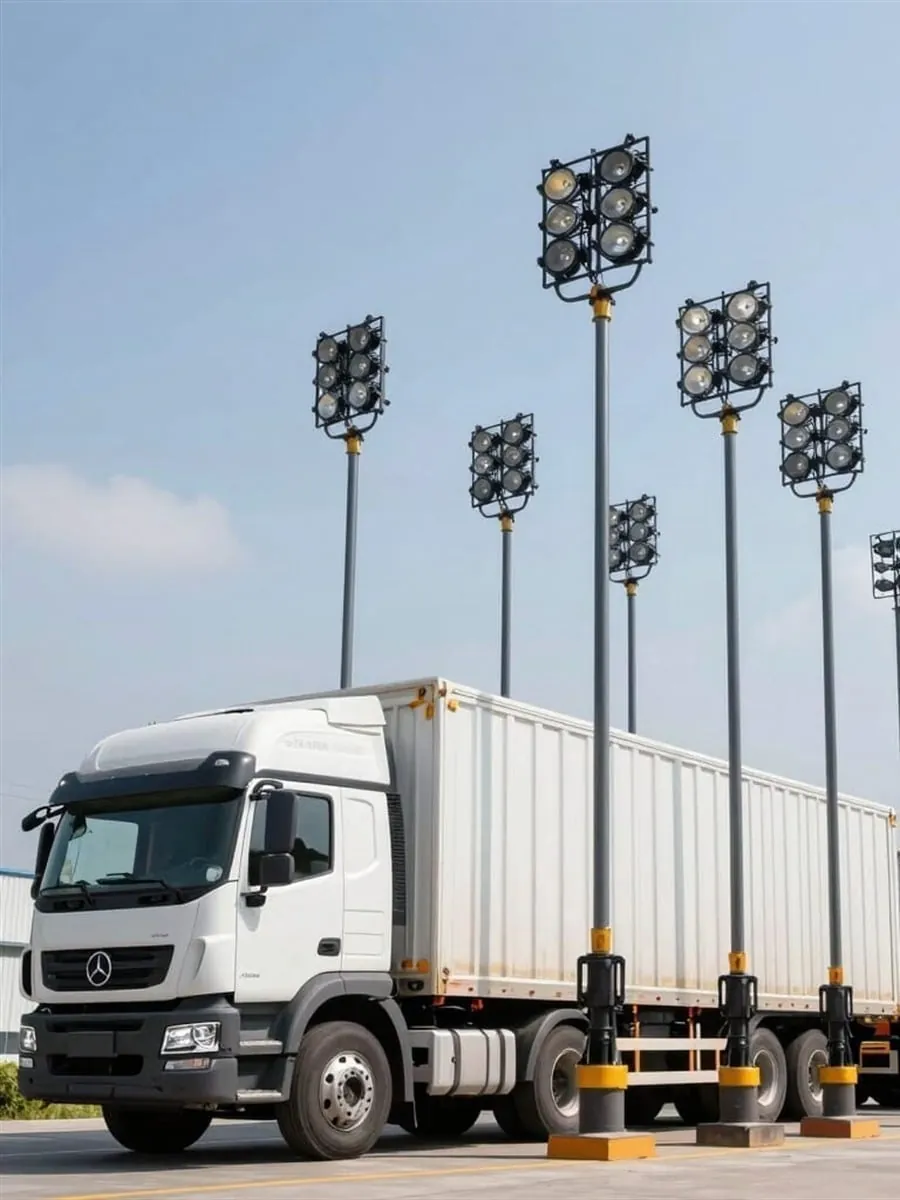
For stadiums, yards, and large parking lots, high lighting masts are used — 15 to 30 meters tall, carrying concentrated floodlight systems at the head. Their design differs fundamentally from road poles: lateral wind force becomes the governing factor, and they require careful structural load calculations.
These poles need a special maintenance approach — a cherry picker or a lowering headframe that brings the floodlights down to ground level — and their long-term maintenance cost is a core line item to account for from the design stage. See the technical page: stadium and court lighting masts.
How to choose the right type for your project
The practical rule: start from the function of the site. Roads and streets call for galvanized functional poles at heights suited to the illumination level; gardens and walkways call for pedestrian scale and warm light; façades and tourism destinations call for decorative or laser-cut poles that serve the visual identity; and stadiums call for high masts with their own load calculations.
Many projects mix several types: street poles on the main axes, bollards on the walkways, and decorative poles at the entrances. What matters is keeping the style coherent within each zone.
At the Aktar factory we manufacture all of these families with custom heights, finishes, and details for each project. Send us the nature of the site and the required illumination level, and our engineering team will return a written recommendation on the suitable types and quantities. The consultation is free and non-binding.
Frequently asked questions
What is the difference between a conical and a cylindrical lighting pole, and which suits roads?
A conical pole tapers toward the top, distributing wind stress along its length, which makes it suitable for the greater heights used on roads and streets; a cylindrical pole keeps a constant diameter and is often preferred for decorative applications and lower heights. The choice between the two shapes is not purely aesthetic — it ties to wind-load calculation under the Saudi Building Code (SBC 301), the mounting height, and the arm. The appropriate wall thickness and section are confirmed by a structural calculation for each site and wind-speed class.
How do I choose lighting pole height by site type?
The practical rule starts from the site function and the target illumination level: walkways and gardens around 2 to 5 meters, secondary roads and parking lots around 4 to 8 meters, main roads around 10 to 12 meters, and stadiums and large yards calling for high masts around 15 to 30 meters. These are indicative ranges, confirmed by a photometric calculation (DIALux or AGi32) against the governing class in CIE 115, EN 13201, and the SASO 2927 classes. The choosing-lighting-pole-height guide details the relationship between height and pole spacing.
When should I use high masts instead of standard road poles?
High masts are used when a wide area must be lit from a single point — stadiums, yards, large parking lots, and major interchanges — typically at heights of 15 to 30 meters carrying concentrated floodlight systems at the head. Their design differs fundamentally from road poles because lateral wind force becomes the governing factor, requiring careful structural load calculation under SBC 301. They also need a special maintenance approach via a lowering headframe that brings the floodlights to ground level, a cost line accounted for from the design stage, as detailed in the stadium-mast-engineering guide.
What is the difference between decorative poles and laser-cut poles?
Both serve the visual identity of a site, but a decorative pole relies on its overall form and on casting, base, and head details in a classical or modern geometric style, and it is read in daylight before it is lit at night. Laser-cutting adds precise etching on the structure — a logo, a motif, or perforations that cast a luminous shadow when lit from inside — and it can be combined with any of the other families. The governing principle, as in the decorative-pole-design guide, is that the pole should serve the place rather than overpower it, with a consistent style kept within each zone.