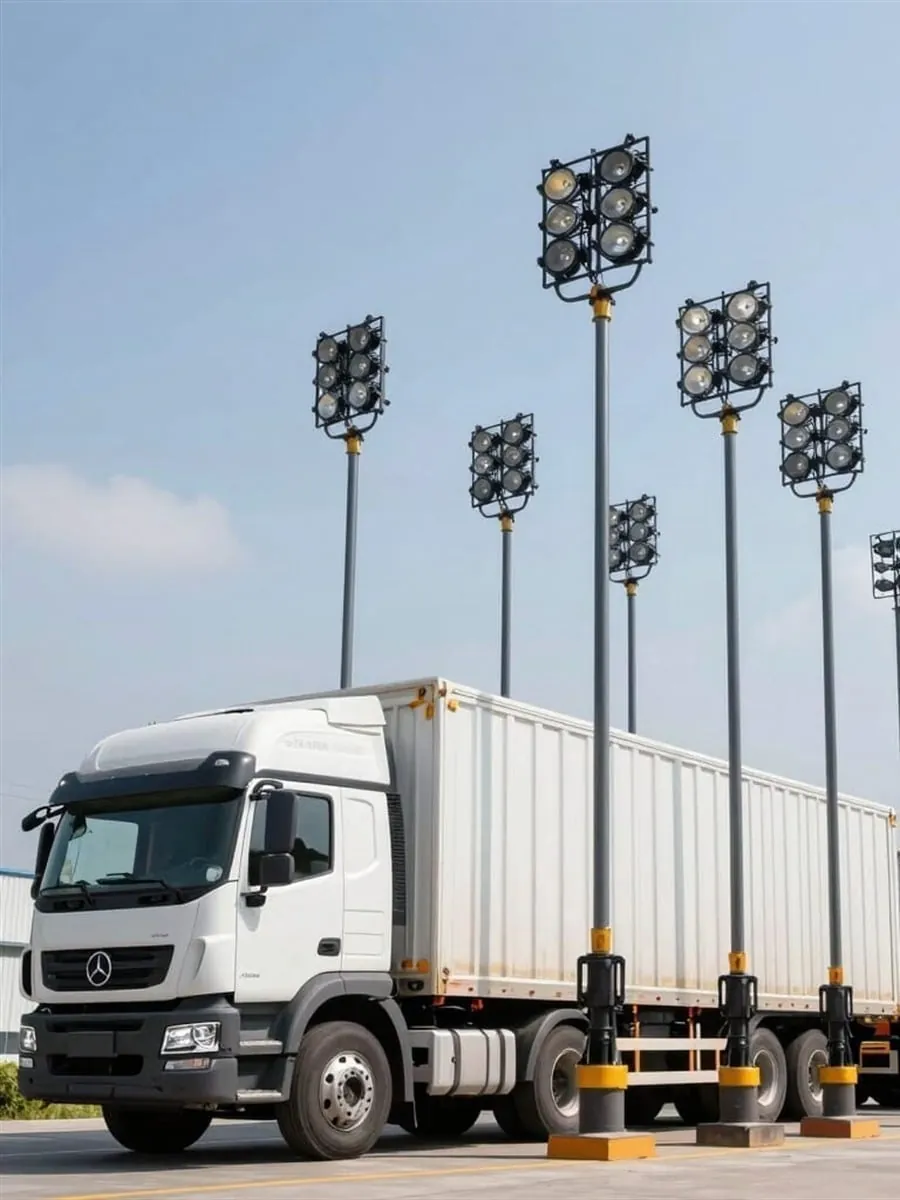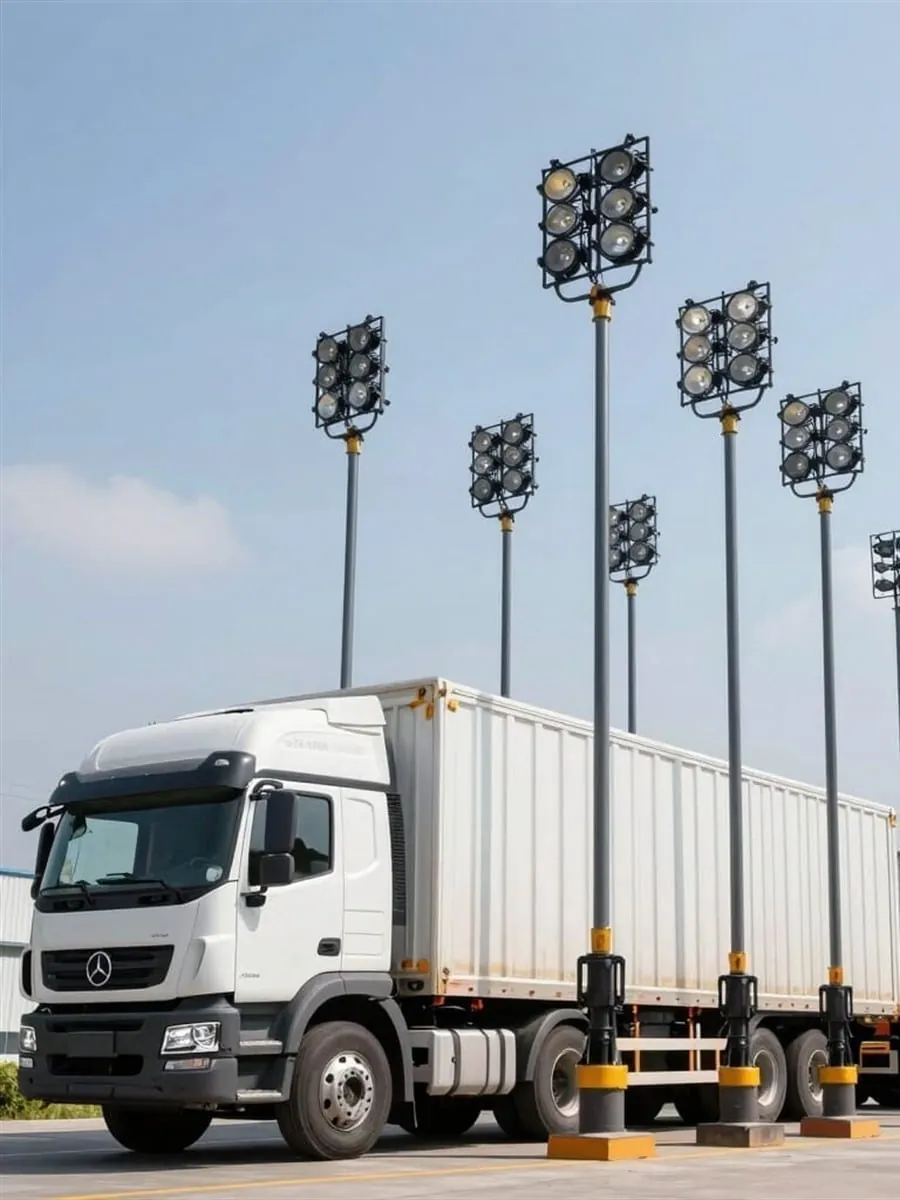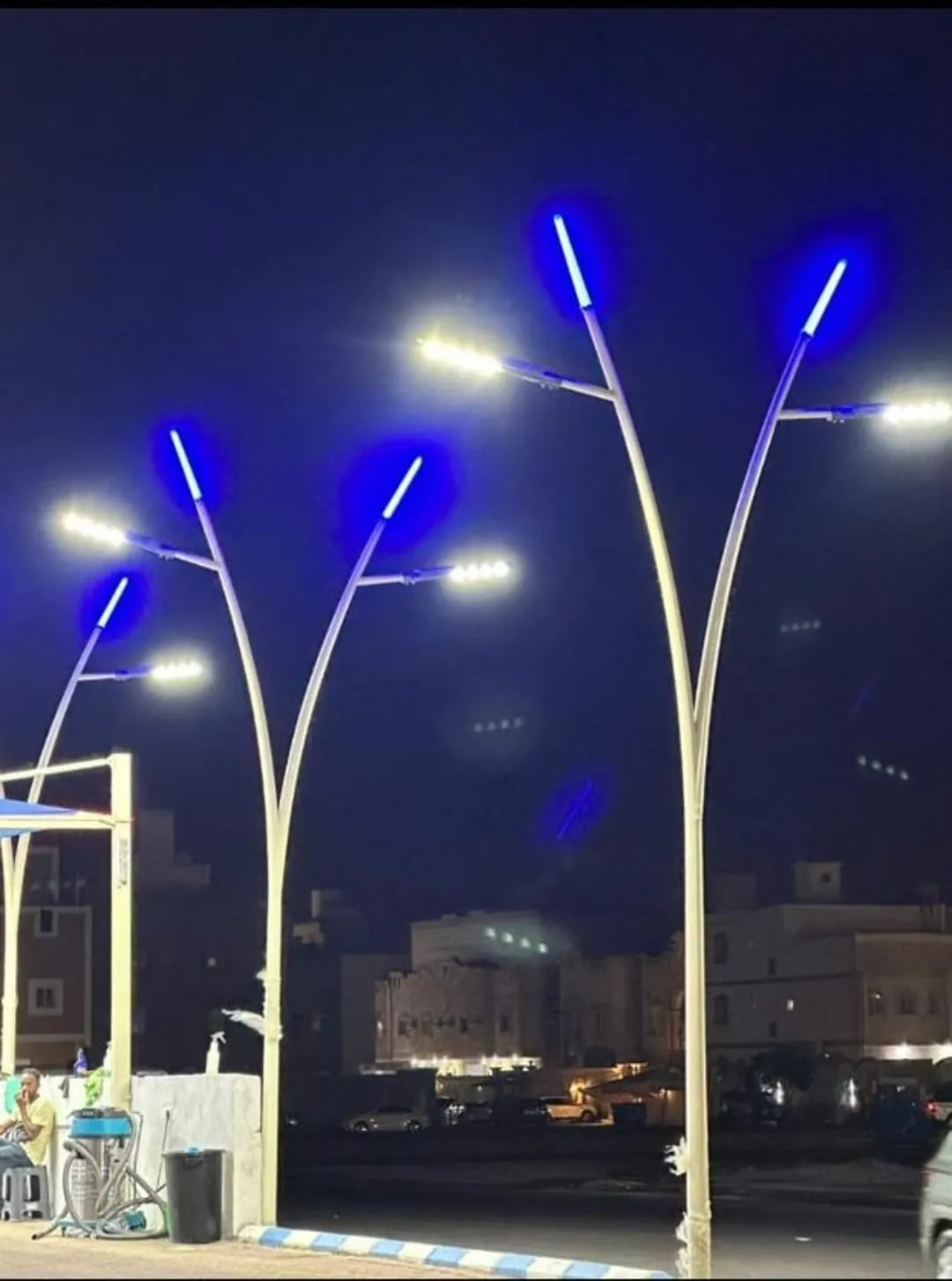
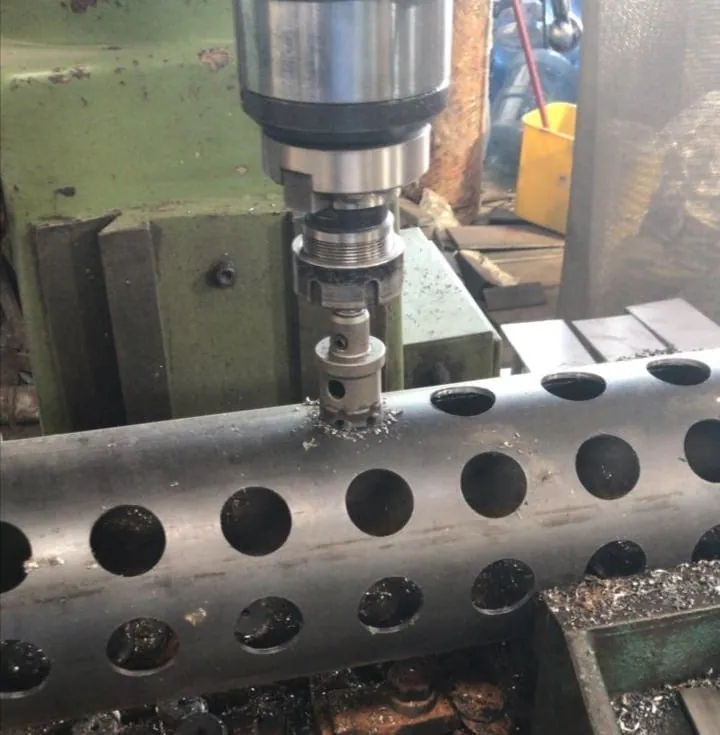
Why high masts are a category of their own
A pole 20 meters or taller is fundamentally different from a typical road pole — in load calculations, manufacturing technique, installation method, and maintenance. You can't apply the same standards and expect a reasonable service life.
The key difference: at large heights, lateral wind force becomes more impactful than the vertical load of the floodlights. This flips design priorities from "how much can it carry" to "how much does it deflect and oscillate".
Lateral load calculations
Wind is the governing factor. The general rule: each additional meter of height raises the base moment roughly as a square, because the wind-exposed area grows and the arm the wind acts on lengthens.
Floodlights mounted on the head add extra exposed area. A 6-fixture LED rig at 1500 W can add roughly 2 m² of wind exposure above the pole head.
Net result: a 25-meter pole needs a base 700 to 800 mm in diameter at the bottom, tapering to 250 mm at the top, with 6 to 8 mm wall thickness.
Maintenance approach
Cherry-picker maintenance is feasible up to about 25 meters. Above that, it becomes uneconomical and lowering-headframe solutions are chosen: an internal winch system that brings the floodlights down to ground level for service.
Maintenance cost is the largest line item in a pole's lifecycle — it can exceed the original purchase price after 15 years. A design that ignores serviceability charges the customer later.
Installation on site
A 25-ton-class crane at minimum is required to lift a 20-meter pole into installation position. The concrete foundation has to be poured at least 28 days before installation to fully develop strength.
Anchor bolts are embedded in the concrete with precision using a template supplied by the pole manufacturer — a center offset greater than 5 mm creates a plumbness problem that's hard to correct after the fact.
Total cost of life
Calculate total cost = pole cost + installation + expected 20-year maintenance + potential replacement cost. The cheapest purchase may be the most expensive after 5 years if it wasn't built for Saudi conditions.
Our factory has supplied high masts to dozens of stadiums and major yards across the Kingdom's regions. Every project is its own request, every site a separate structural calculation. Reach out to our engineering team for a tailored consultation, no cost.
Frequently asked questions
What is the difference between a high mast and a regular lighting pole?
A high mast is a pole taller than roughly 15 meters carrying a concentrated floodlight rig at its head, used in stadiums, large yards, parking areas, and major interchanges. The key engineering difference is that the governing load becomes lateral wind force rather than the vertical floodlight load, so the base diameter and wall thickness are sized for bending moment and oscillation per the Saudi Building Code (SBC 301) wind requirements. It also differs in installation and maintenance approach, which is detailed in the types-of-lighting-poles guide and the lighting-pole-height guide.
How are wind loads on a tall stadium mast calculated?
Wind is treated as a lateral force acting on the total exposed area: the pole shaft plus the area of the floodlights and their arms at the head, where a large rig can add around 2 square meters of exposure. As a general rule, the base moment rises roughly with the square of the height, and the design wind speed is set by region under SBC 301. Exact figures for base diameter and wall thickness are only confirmed by an independent structural calculation per site, since they depend on height, head load, and foundation soil.
When do I need a lowering headframe instead of cherry-picker maintenance?
Cherry-picker maintenance remains economical up to about 25 meters; above that, an internal-winch lowering headframe that brings the floodlights to ground level becomes the practical choice. The decision is also influenced by crane access to the site and the expected number of maintenance cycles per year. It is best fixed at the design stage because it changes the mast head detail, and lifecycle maintenance cost can exceed the original purchase price after some years.
What are the foundation and anchor-bolt requirements for a high mast?
The concrete foundation is poured and left to develop strength for roughly 28 days before installation, with its size and reinforcement set by a structural calculation that balances the wind-induced overturning moment. Anchor bolts are embedded with precision using a template supplied by the pole manufacturer, since a center offset greater than about 5 mm creates a plumbness problem that is hard to correct after the pour. Lifting a 20-meter pole into installation position requires a crane of at least the 25-ton class.