Why court lighting is a category of its own
Lighting a sports court is not scaled-down road lighting. On a road it is enough for the driver to see the lane; on a court the player tracks a fast ball in the air and needs a clear view without being blinded when looking up.
As padel and small-court sports expand across the Kingdom, getting the lighting right has become a direct operational advantage: a well-lit court books more hours after dusk, and a poorly lit one loses its peak hours.
Required light levels
Light intensity is measured in lux, and it varies with the level of play. For recreational play and training, a padel or tennis court is usually fine between 200 and 300 lux. For competitive matches or filming, the requirement rises to 500 lux or more.
Futsal usually needs a slightly higher level because of the larger court and faster play. But the number alone is not enough — distribution uniformity matters just as much: a large gap between the brightest and darkest spot makes the ball visually disappear as it crosses the court.
Pole height and placement
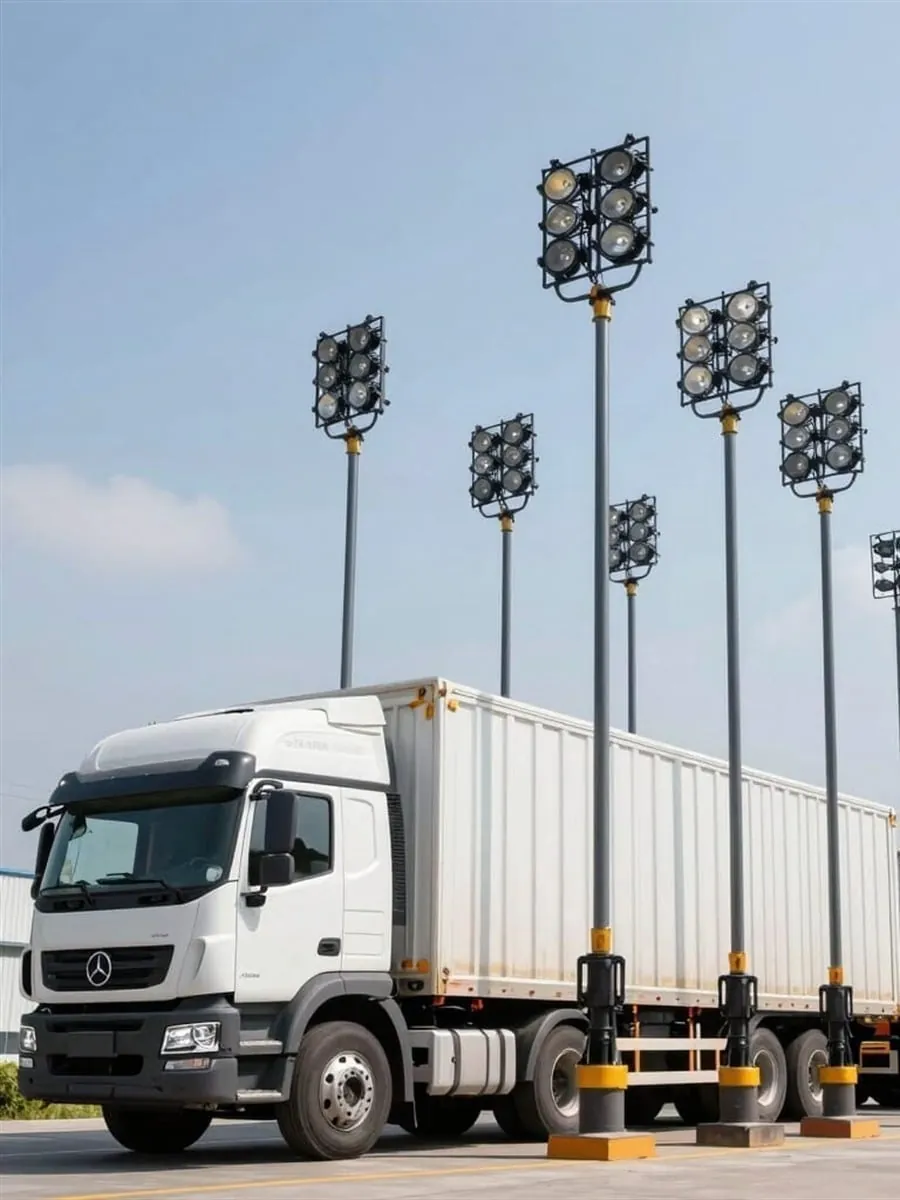
A typical padel court is served by four poles at the corners, or six for longer courts, at a height usually between 6 and 8 meters. A tennis court needs a slightly greater height to cover its wider area.
Futsal usually needs poles between 8 and 10 meters distributed along both sides. The core rule: the fixture must be high enough to light the ball at the top of its arc, and far enough from the player's line of sight.
Pole position matters as much as its height: poles at the corners and at correct aiming angles reduce the shadows players cast on each other and keep direct light out of their eyes.
Glare control — the most overlooked factor
Glare is what most ruins the playing experience, and what cheap quotes most often neglect. A fixture aimed at the wrong angle puts a harsh spot of light in the player's eye exactly as they track a high ball.
Glare is addressed three ways: choosing fixtures with a suitable optical shield, precisely tuning the aiming angle, and raising the mounting point to reduce the direct angle to the player's line of sight. Courts near homes also need light spill outside the court boundary controlled, out of respect for the neighbors.
Manufacturing and installation considerations
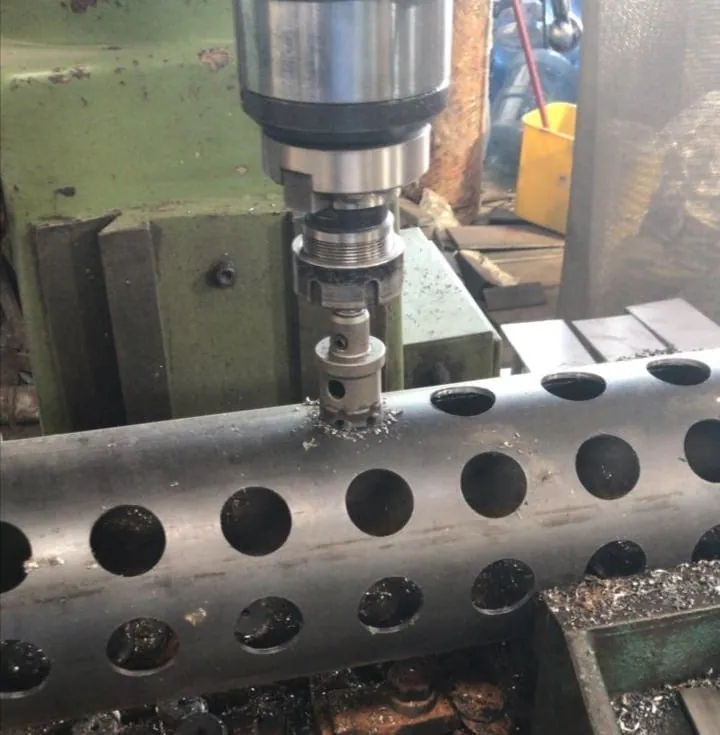
Since most courts are outdoors, the poles should be galvanized to resist rust, with powder coating available if color is part of the facility's identity. Poles carrying more than one fixture need a cross-arm or a mounting frame designed for the load.
It is best to route the lighting cables inside the pole, not outside — cleaner visually and better protected from tampering and weather. A maintenance door should be left at the base of the pole for access to the connections.
At Aktar we manufacture court poles with custom heights and arms to suit the sport and the court dimensions. Send us your court measurements and the number of fixtures required, and our engineering team will prepare a recommendation for the right poles. The consultation is free and non-binding.
Frequently asked questions
How many lux does a padel or tennis court need?
The required light intensity varies with the level of play: for recreational play and training, a padel or tennis court is usually fine between 200 and 300 lux, while competitive matches or filming rise to 500 lux or more. The sports-lighting standard EN 12193 sorts courts into classes (III for recreation, II for local competition, I for higher levels), each with a target lux value and a minimum distribution uniformity. These remain indicative ranges, verified with a photometric calculation (DIALux) against the class governing the court.
What pole height is right for a padel court?
A typical padel court is served by four poles at the corners, or six for longer courts, at a height usually between 6 and 8 meters, while tennis needs a slightly greater height for its wider area and futsal around 8 to 10 meters distributed along the sides. The core rule is that the fixture must be high enough to light the ball at the top of its arc, and far enough from the player's line of sight. The final height is set by the court dimensions, fixture layout, and aiming angles within the photometric calculation.
How is glare reduced in court lighting?
Glare is addressed three ways together: choosing fixtures with a suitable optical shield, precisely tuning the aiming angle, and raising the mounting point to reduce the direct angle to the player's line of sight as they track a high ball. EN 12193 assesses glare with the GR index, often targeting a value no higher than about 50, verified photometrically. Courts near homes also need light spill outside the court boundary controlled, out of respect for the neighbors.
Why does distribution uniformity matter in sports-court lighting?
The number alone is not enough; a large gap between the brightest and darkest spot makes the ball visually disappear as it crosses the court. Uniformity is expressed as the ratio Uo (minimum lux to average), and the higher classes of EN 12193 demand higher values for it. Because uniformity depends on fixture layout and aiming angles as much as on their number, it is verified with a photometric calculation over a measurement grid before the design is approved.